
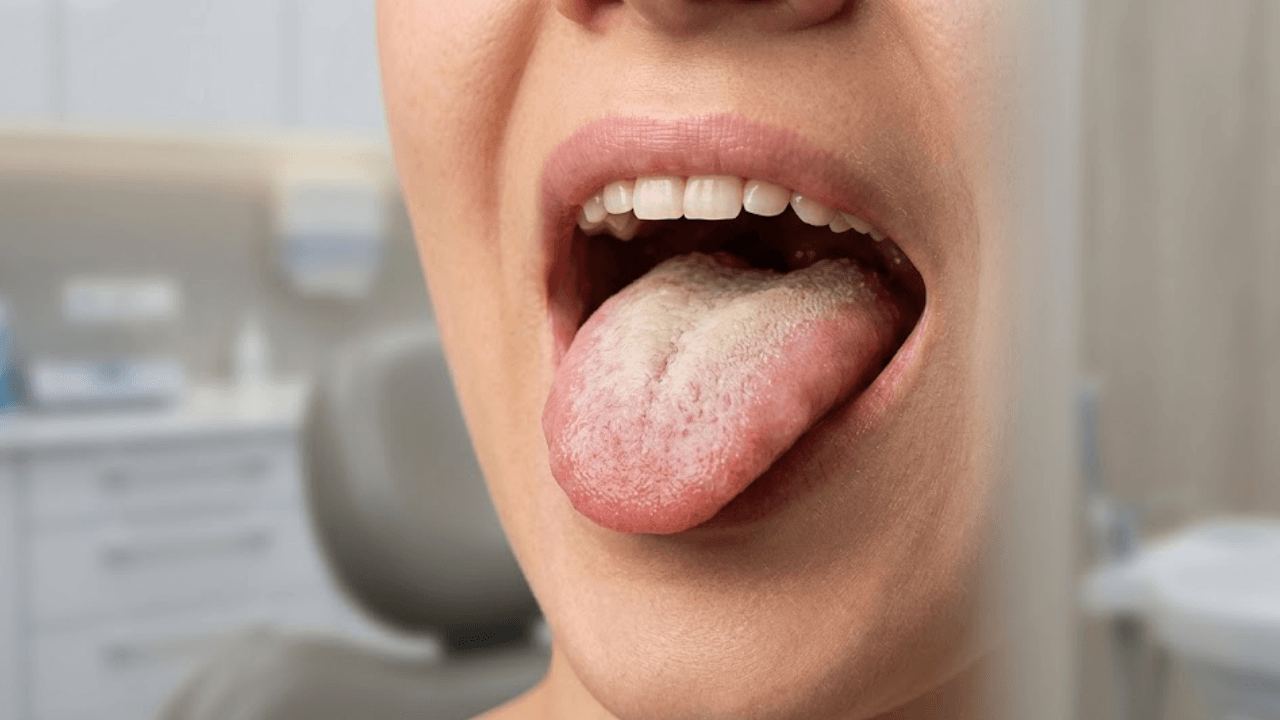
You look in the mirror, stick out your tongue, and notice it. A white coating. Maybe it covers the whole surface. Maybe it is just the back or a few scattered patches.
Your first reaction is probably alarm. Your second is probably a Google search that leads straight to a list of infections and oral cancers. That fear is understandable, especially as studies have shown rising rates of oral tongue cancer in recent years.
Here is the honest answer: a white tongue is usually harmless. In most people, it clears up within a few days. But some cases do signal something that needs a dentist’s attention.
This guide helps you tell the difference.
Key Takeaway:
- A white tongue is most often caused by bacteria, dead cells, and debris trapped between the tiny bumps on your tongue.
- The most common triggers are poor oral hygiene, dehydration, dry mouth, smoking, and antibiotic use.
- Most cases clear up within 3 to 7 days with better oral hygiene and more water.
- If the white coating does not scrape off, lasts longer than two weeks, or comes with pain or sores, see a dentist.
- White patches that cannot be wiped away, especially in smokers or heavy drinkers, need professional evaluation.
What Is Causing Your Tongue to Turn White?
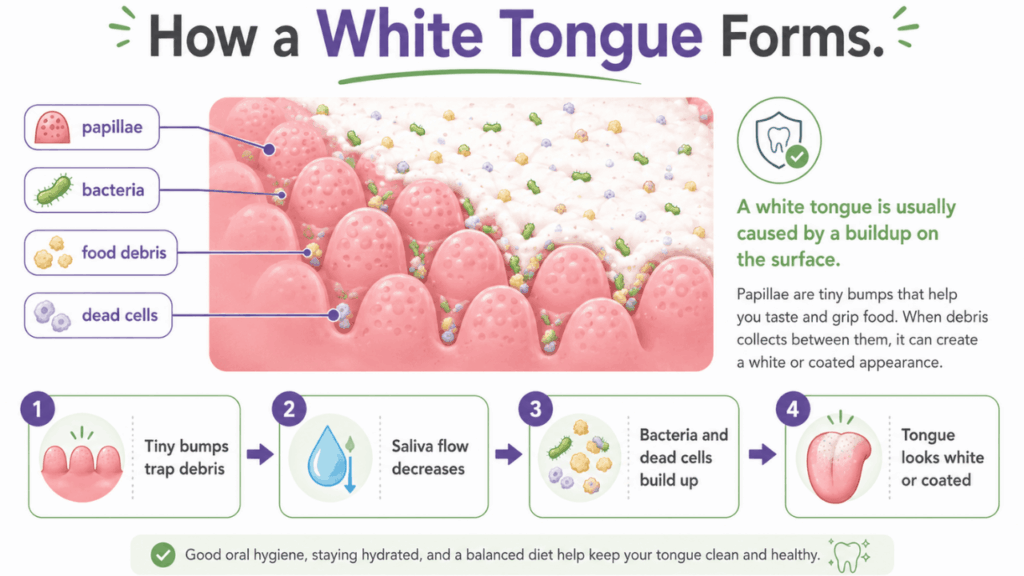
Your tongue is covered in tiny bumps called papillae. These create a textured surface where bacteria, food debris, and dead cells collect. When buildup accumulates faster than your body clears it, the tongue takes on a white or off-white appearance.
Common Lifestyle-Based Causes
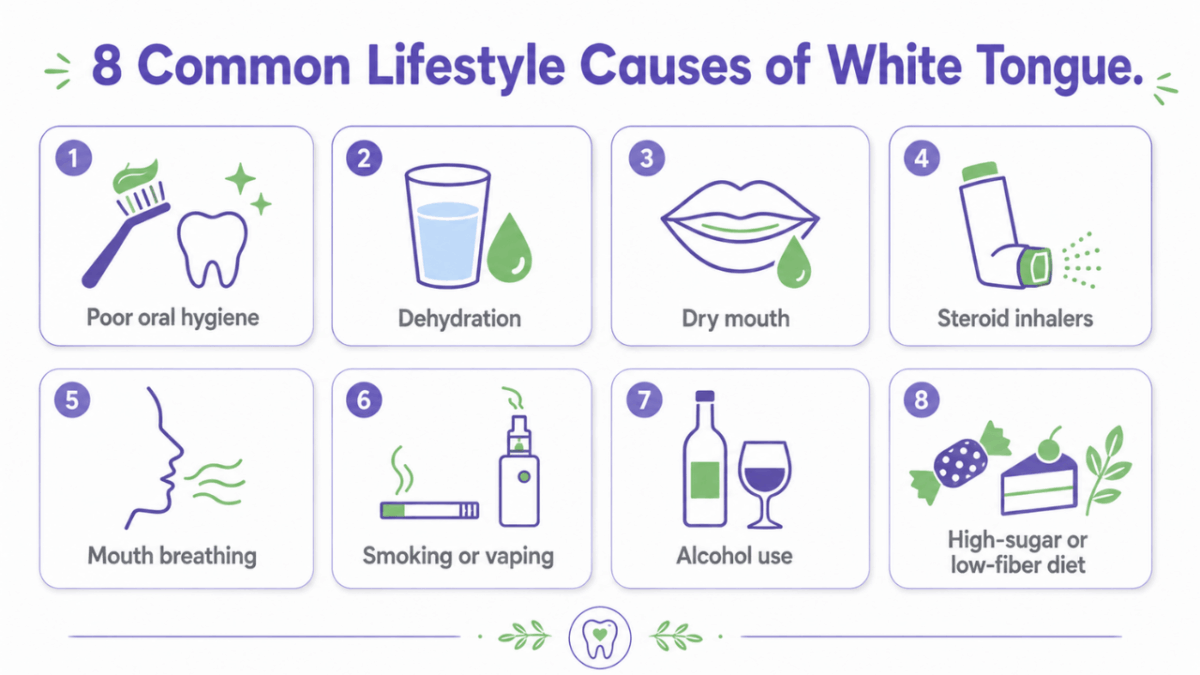
These causes account for the vast majority of white tongue cases. They are usually temporary and respond well to home care.
1. Poor Oral Hygiene
Poor oral hygiene is the most common trigger. If you do not clean your tongue daily, debris builds up quickly between the papillae. Most people brush their teeth but skip the tongue entirely.
2. Dehydration
Dehydration reduces saliva production. Saliva is your mouth’s natural cleaning system. Without enough of it, bacteria multiply, and the tongue develops a white film. Women need roughly 8 cups of water per day; men need closer to 12.
3. Dry Mouth
Dry mouth from medications is more common than most people realize. Muscle relaxers, antihistamines, antidepressants, and certain blood pressure medications all reduce saliva flow as a side effect.
4. Steroid Inhalers
They are used for asthma or COPD, which can cause white patches on the tongue if you do not rinse your mouth after each use. Residual medication collects on the tongue’s surface and promotes yeast growth. This specific trigger appears in very few articles but affects a significant number of inhaler users.
5. Mouth Breathing
This happens, especially during sleep, dries the tongue, and creates conditions where debris sticks more easily.
6. Smoking or Vaping
Smoking or vaping irritates the tongue’s surface and reduces saliva production. Long-term tobacco use also increases the risk of more serious conditions.
7. Alcohol
It causes dehydration and irritates oral tissues. Alcohol-based mouthwashes can actually worsen a white coating rather than help it.
8. Low Fiber or High Sugar Diet
A low-fiber or high-sugar diet feeds bacteria in the mouth and contributes to buildup on the tongue.
Medical Conditions That Can Cause a White Tongue
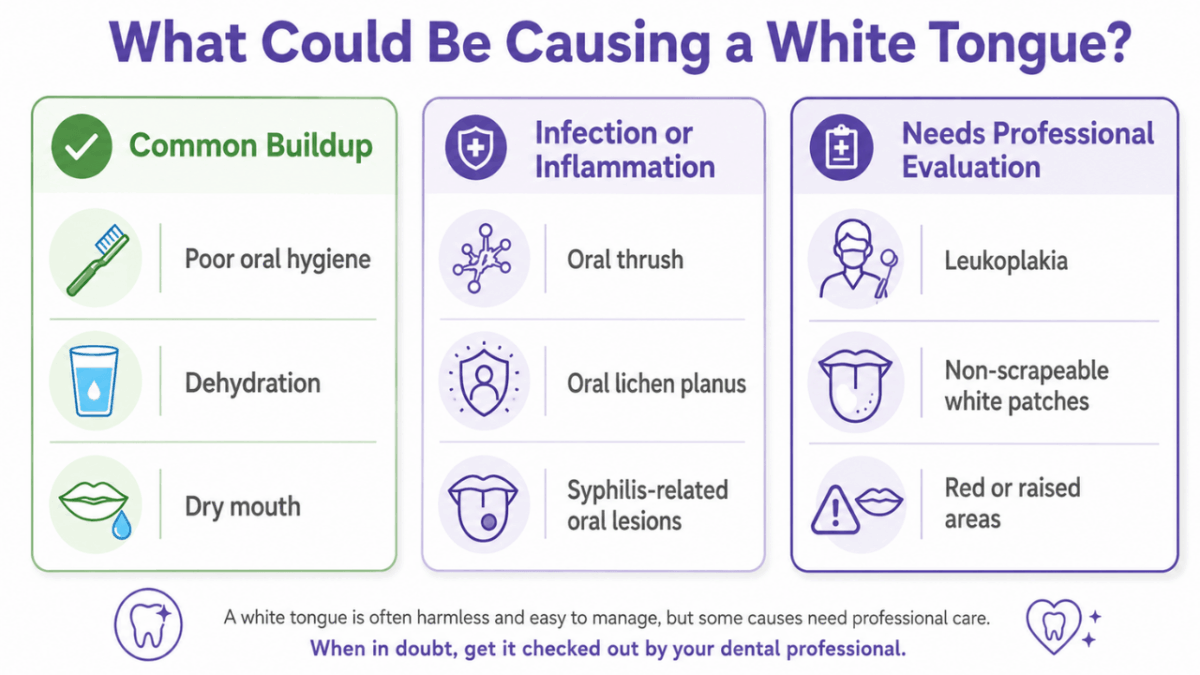
These are less common than lifestyle causes, but they require different treatment.
1. Oral Thrush
Oral thrush is a yeast infection caused by the Candida fungus. It produces creamy white patches that resemble cottage cheese. Thrush is common after antibiotic use, in people with diabetes, in steroid inhaler users who do not rinse afterward, and in anyone with a weakened immune system. It is treated with antifungal medication.
2. Leukoplakia
This condition produces thick white or grayish patches that cannot be scraped off. It is strongly associated with tobacco use and heavy alcohol consumption. Some cases are precancerous, which is why persistent, non-scrapeable white patches in smokers need professional evaluation.
3. Oral Lichen
Oral lichen planus causes a lacy, white pattern on the tongue or inner cheeks. It is an immune system condition. It can cause soreness and needs ongoing monitoring by a dental professional.
4. Geographic Tongue
Geographic tongue creates a map-like pattern of red patches with white borders that shift location over time. It is harmless and does not require treatment unless it causes sensitivity to spicy or acidic food.
5. Syphilis
Syphilis can produce white lesions inside the mouth. This is rare, but worth knowing: if you have unexplained oral lesions alongside other symptoms, see a doctor.
What the Location of Your White Coating Can Tell You
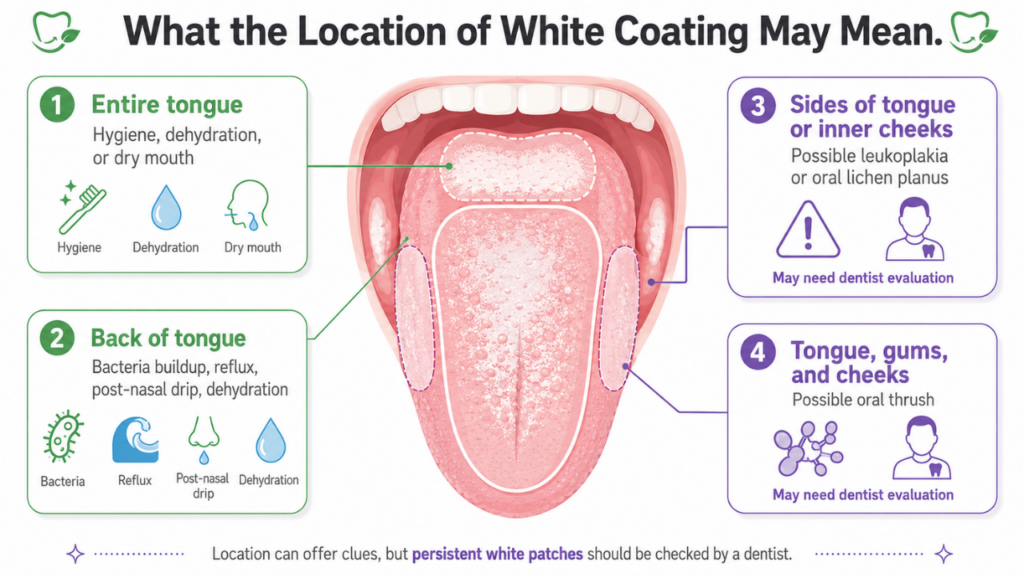
Most white tongue content treats it as one condition. It is not. Where the coating appears can point you toward the likely cause.
White Coating Across the Entire Tongue
A full tongue coating that spreads evenly across the surface is most often related to poor oral hygiene, dehydration, or dry mouth. This is the most common presentation and is usually harmless.
White Coating at the Back of the Tongue
A white coating only at the back of the tongue is also very common. The back of the tongue collects the most bacteria and is the hardest area to clean. Acid reflux, post-nasal drip, and dehydration can all contribute to buildup there. Many people who brush their teeth but skip tongue cleaning notice whiteness mainly in this area.
White Patches on the Sides of the Tongue or Inner Cheeks
White patches in specific spots, especially along the sides of the tongue or inside the cheeks, are more likely to be related to leukoplakia or oral lichen planus. If these patches are raised, firm, painful, or gradually spreading, it is important to see a dentist or oral specialist.
White Patches on the Tongue, Gums, and Cheeks
White patches that appear not only on the tongue but also on the gums or inside the cheeks may indicate oral thrush. This is especially common after a recent course of antibiotics or in people with weakened immune systems.
The Scrape Test: A Simple First Step Before Calling a Dentist
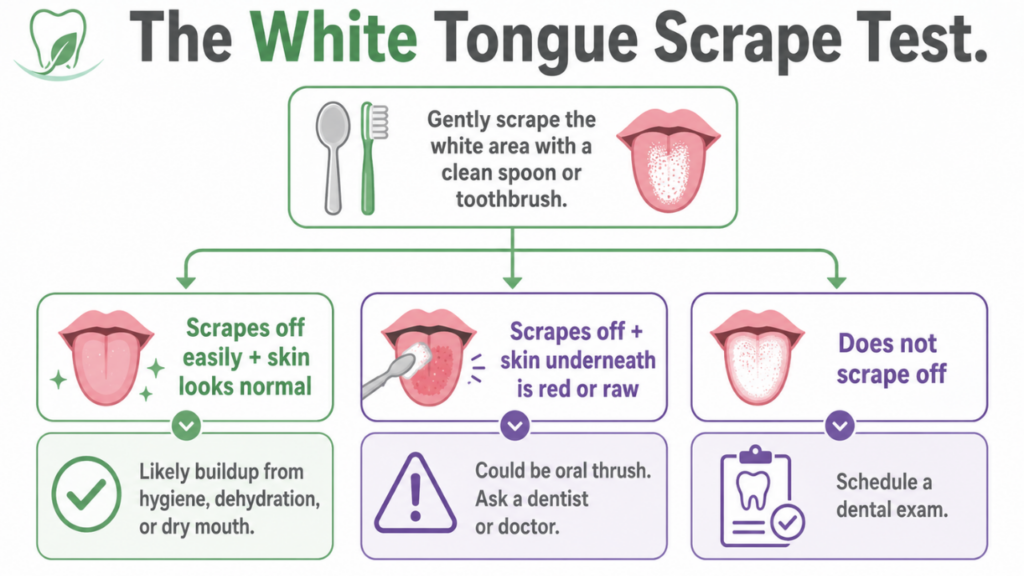
This is one of the most practical things you can do at home before deciding whether to book an appointment.
Take a clean spoon or your toothbrush and gently press against a white area on your tongue.
If it scrapes off easily and the skin underneath looks normal, the cause is almost certainly buildup from hygiene, dehydration, or dry mouth. Improve your oral care routine and it should clear within a few days.
If it scrapes off and the skin underneath is red or feels raw, this is consistent with oral thrush. You need antifungal treatment from a dentist or doctor.
If it does not scrape off at all, see a dental professional. Non-scrapeable white patches are more likely to be leukoplakia or another condition that needs proper diagnosis.
The scrape test does not replace an exam. But it gives you useful information before you make the call.
How to Get Rid of a White Tongue at Home
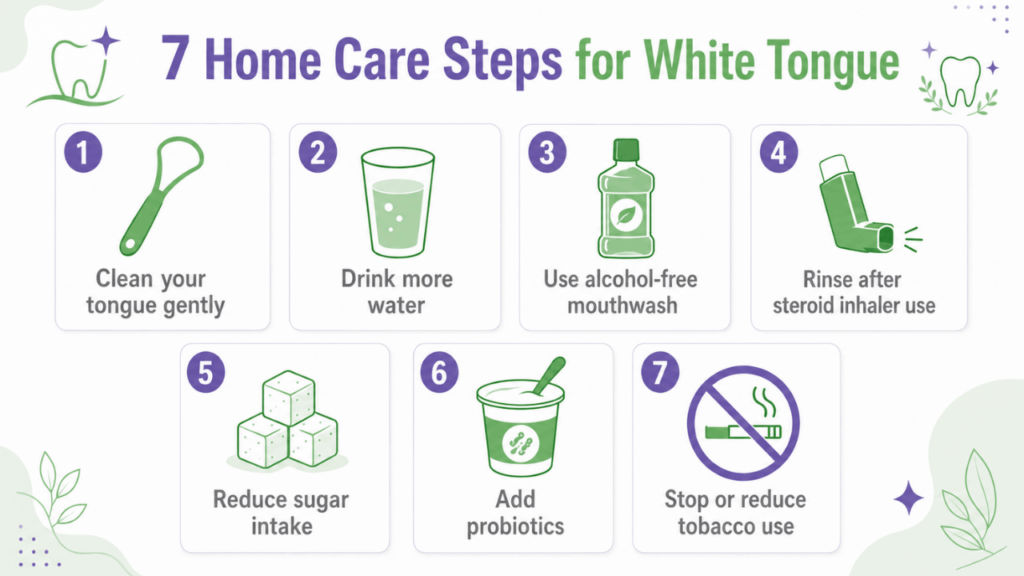
If lifestyle factors are the cause, these steps will clear the coating for most people within 3 to 7 days.
1. Clean Your Tongue Every Time You Brush
Use a soft-bristle toothbrush or a tongue scraper. Start at the back and move forward in a single direction. Three strokes, including the center, left side, and right side, are enough. Do not scrub back and forth aggressively. That irritates the papillae and can make the tongue look temporarily worse.
2. Drink More Water Throughout The Day
Consistent hydration keeps saliva production steady, which is your mouth’s built-in defense against bacterial buildup.
3. Switch To An Alcohol-Free Mouthwash
Alcohol-based rinses dry out oral tissue and can contribute to the same conditions that cause white tongue. An alcohol-free, antimicrobial rinse is the better choice.
4. Rinse After Every Inhaler Use
If you use a steroid inhaler for asthma or COPD, rinse with water and spit after every use. This removes residual medication before it can promote yeast growth on the tongue.
5. Reduce Sugar Intake
Refined sugars feed the bacteria and yeast responsible for tongue coating. Even small reductions can improve results.
6. Add Probiotics To Your Diet
Fermented foods like plain yogurt, kimchi, and kombucha support healthy bacteria in the mouth and gut. This is especially useful after a course of antibiotics, which can disrupt your mouth’s natural microbiome and make white tongue more likely.
7. Stop or Reduce Tobacco Use
For smokers with persistent white tongue, this is the most impactful single change.
White coating that is not clearing up after a week of home care?
At Robison Dental in Colorado Springs, Dr. Letha Robinson will examine your tongue, tell you exactly what she finds, and walk you through the next steps, clearly and without pressure.
When a White Tongue Is Actually Serious
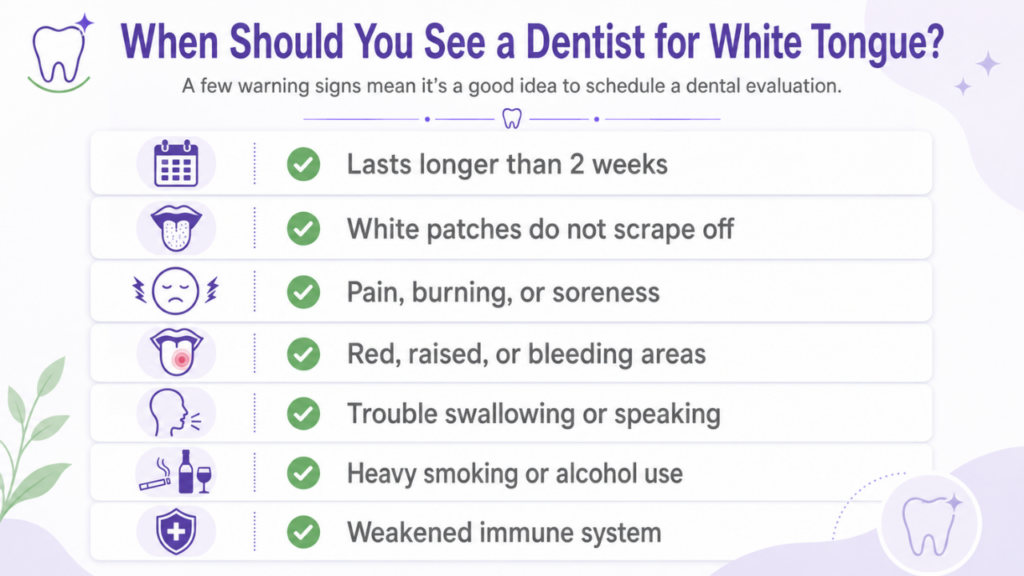
Most white tongues are not serious. But these specific signs mean you should call a dentist rather than wait.
1. It Has Not Improved After Two Weeks
If your white tongue has not improved after two weeks of consistent oral hygiene and hydration, lifestyle factors may not be the main cause. Persistent changes deserve professional evaluation.
2. The White Patches Do Not Scrape Off
A removable white coating is usually harmless debris or buildup. Patches that do not scrape off may need evaluation to rule out leukoplakia or other oral conditions.
3. You Have Pain, Burning, or Soreness
A painless white coating is often benign. Pain, burning, tenderness, or irritation changes the picture and may point to infection, inflammation, or tissue damage.
4. You Notice Red, Raised, or Bleeding Areas
White patches mixed with red, raised, thickened, or bleeding areas can sometimes signal more serious tissue changes. In some cases, a biopsy may be recommended.
5. You Have Trouble Swallowing or Speaking
Difficulty swallowing, speaking, or moving the tongue normally suggests deeper irritation or involvement and should be checked promptly.
6. You Smoke or Drink Heavily
Persistent white patches are more concerning in people who smoke or drink heavily because these habits increase the risk of precancerous oral changes.
7. You Have a Weakened Immune System
People with diabetes, HIV, autoimmune disorders, or those undergoing cancer treatment are more vulnerable to oral infections such as thrush. A white tongue in these situations should be evaluated sooner rather than later.
What to Expect When You See a Dentist for White Tongue
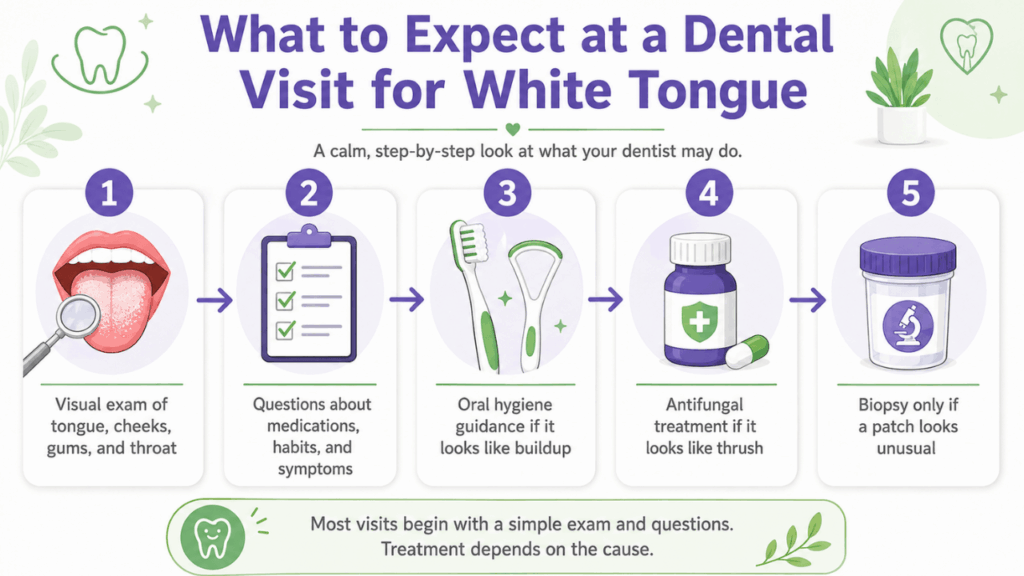
Most white tongue cases are straightforward to diagnose and treat. Here is what typically happens during a dental visit.
1. A Visual Examination of Your Mouth
The dentist will examine your tongue, cheeks, gums, and throat. They are checking the color, texture, borders, and distribution of any white areas. They may also gently feel the surface to identify firmness, thickening, or raised patches.
2. Questions About Your Health and Habits
You will likely be asked about:
- Current medications
- Tobacco or alcohol use
- Recent antibiotic use
- Dry mouth symptoms
- Oral hygiene habits
- How long has the coating been present
These details help narrow down the most likely cause.
3. If It Looks Like a Simple Buildup
If the coating appears related to bacteria, dehydration, or poor tongue cleaning, the dentist will usually recommend specific oral hygiene steps and may schedule a follow-up visit to confirm improvement.
4. If It Looks Like Oral Thrush
If the white patches are consistent with oral thrush, treatment may include an antifungal rinse, lozenge, or oral medication, depending on the severity and your overall health.
5. If the Patch Looks Unusual
If a patch appears firm, irregular, non-scrapeable, or mixed red and white, the dentist may recommend a biopsy. This involves removing a very small tissue sample for laboratory analysis. The procedure is typically quick and causes minimal discomfort.
6. Most Cases Are Resolved Quickly
Most white tongue cases are identified and managed during the first visit or shortly afterward. The examination itself usually takes only a few minutes. It is better to bring it up early rather than wait for symptoms to worsen.
A white tongue that is not clearing up with home care deserves a professional look. At Robison Dental, Dr. Letha Robinson and her team provide thorough, comfortable oral exams in a warm environment that feels nothing like a typical dental office. You will leave knowing exactly what is going on and what to do next.
Frequently Asked Questions
Note: If you have been diagnosed with oral lichen planus or geographic tongue, aggressive scraping can aggravate those conditions.