
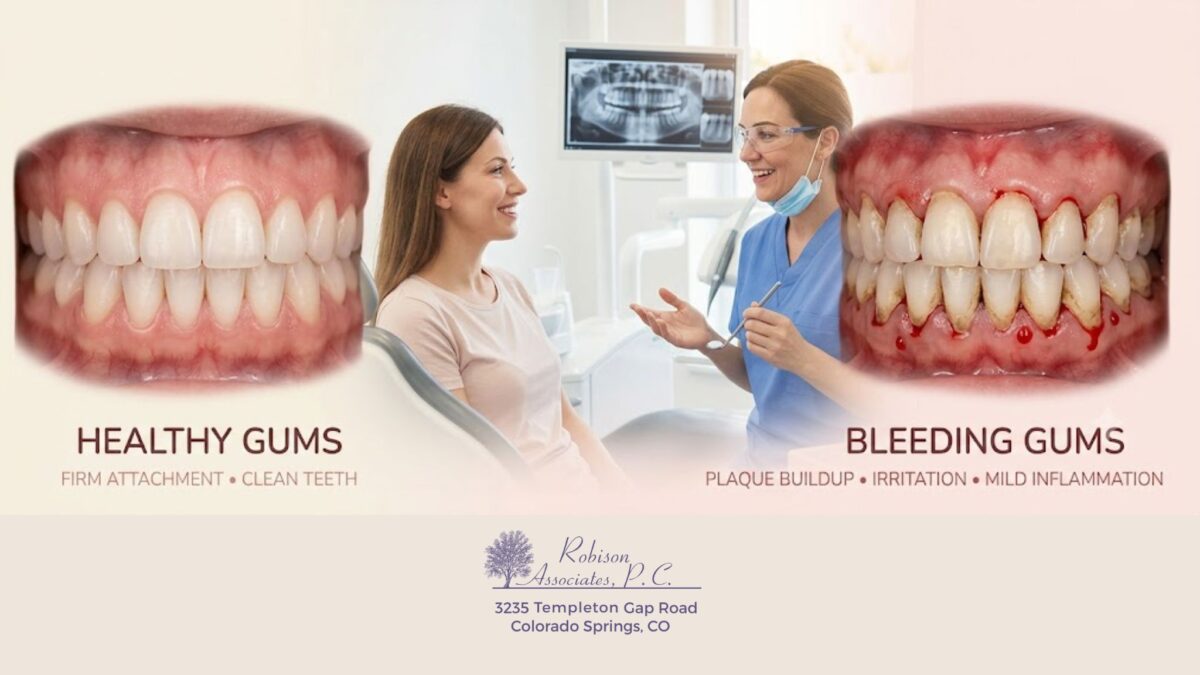
According to the Centers for Disease Control and Prevention (CDC), nearly 42% of adults aged 30 years and older in the United States have some form of periodontal disease.
Bleeding gums are most commonly caused by plaque buildup that irritates the gum tissue and leads to gingivitis (early gum disease). While occasional bleeding can happen from brushing too hard or starting a new flossing routine, gums that bleed regularly should be evaluated by a dentist.
However, other factors such as aggressive brushing, starting a new flossing routine, hormonal changes, certain medications, vitamin deficiencies, smoking, and some health conditions can also contribute.
The good news is that most causes of bleeding gums can be treated successfully, especially when addressed early. Understanding why your gums are bleeding can help you take the right steps to restore healthy gums and protect your smile.
Key Takeaways
- Bleeding gums are not usually normal and may be an early warning sign of gum disease.
- Gingivitis caused by plaque buildup is the most common reason gums bleed.
- Gentle brushing, daily flossing, and professional dental cleanings can improve gum health.
- Ignoring persistent bleeding can allow gum disease to progress.
- Early treatment can help prevent gum recession, bone loss, and tooth loss.
Is It Normal for Gums to Bleed?
Occasional gum bleeding may happen due to temporary irritation. For example, if you brush too aggressively, use a new toothbrush, or recently started flossing, your gums may bleed for a short period.
However, gums that bleed regularly are not considered healthy.
If your gums bleed every time you brush or floss, it usually means there is inflammation caused by plaque buildup or another underlying issue. Because gum disease can progress without causing severe pain in the early stages, bleeding may be one of the first signs that something is wrong.
You should pay attention if your bleeding gums are:
- Happening regularly
- Lasting longer than one to two weeks
- Accompanied by swelling or redness
- Associated with bad breath or a bad taste
- Occurring with gum recession or loose teeth
Early evaluation can help prevent minor gum problems from becoming more serious.
Common Causes of Bleeding Gums
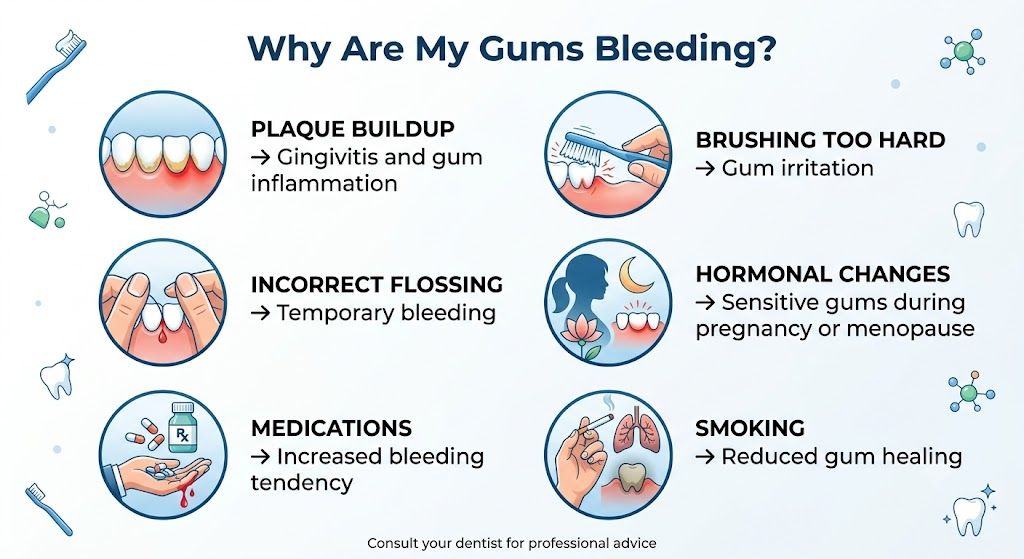
| Cause | Why It Happens | Common Signs | What Helps |
|---|---|---|---|
| Gingivitis | Plaque irritates gum tissue | Red, swollen, bleeding gums | Professional cleaning + better oral hygiene |
| Brushing too hard | Damages gum tissue | Gum irritation or sensitivity | Use a soft-bristled toothbrush |
| New flossing routine | Inflamed gums react to flossing | Mild bleeding initially | Continue gentle flossing |
| Hormonal changes | Increased gum sensitivity | Tender or swollen gums | Regular dental visits |
1. Gingivitis (Early Gum Disease)
Gingivitis is the most common cause of bleeding gums. It occurs when plaque, a sticky layer of bacteria, builds up around the teeth and gumline.
When plaque is not removed through regular brushing and flossing, it irritates the gums. Over time, the gums may become:
- Red
- Swollen
- Tender
- More likely to bleed
Many people with gingivitis do not experience pain, which is why bleeding gums are an important warning sign.
The good news is that gingivitis is usually reversible. With professional cleaning and improved oral hygiene, your gums can often return to a healthier state.
2. Periodontitis (Advanced Gum Disease)
When gingivitis is left untreated, it can progress into periodontitis. This is a more serious form of gum disease that affects the tissues and bone supporting your teeth.
Signs of advanced gum disease may include:
- Gum recession
- Deep pockets around teeth
- Persistent bad breath
- Loose teeth
- Tooth sensitivity
- Changes in your bite
Unlike gingivitis, damage caused by periodontitis cannot be completely reversed. However, professional treatment can slow progression and help protect your remaining teeth.
3. Brushing Too Hard
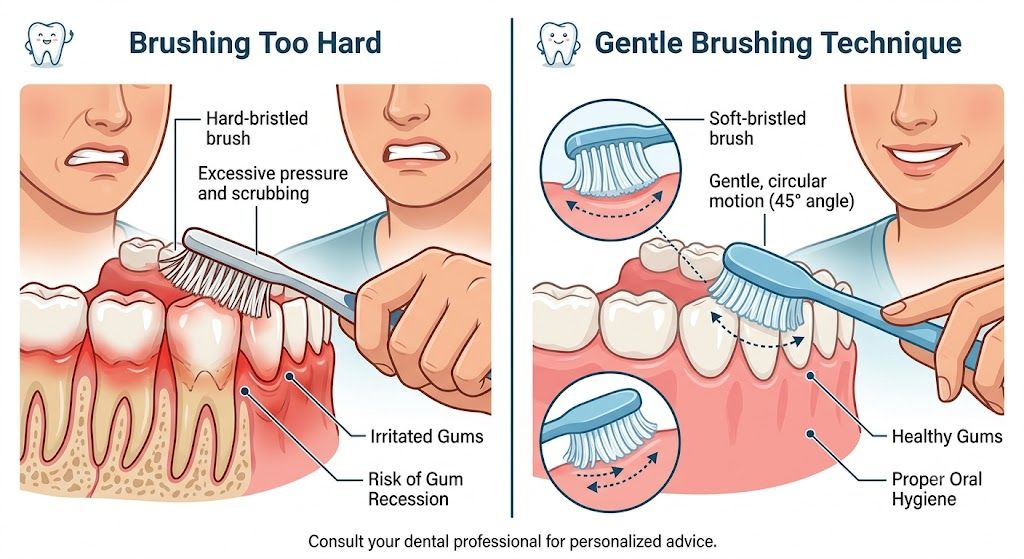
Many people believe brushing harder removes more plaque, but aggressive brushing can actually damage your gums.
Using too much pressure or a hard-bristled toothbrush may:
- Irritate gum tissue
- Cause bleeding
- Contribute to gum recession
- Increase tooth sensitivity
Use a soft-bristled toothbrush and gentle circular motions when brushing. Your toothbrush should clean your teeth—not scrub your gums.
4. Flossing Incorrectly or Starting a Flossing Routine
If you recently started flossing, mild bleeding may occur during the first few days or weeks.
This often happens because your gums are inflamed from plaque buildup between your teeth. With regular and gentle flossing, the inflammation usually improves.
However, if your gums continue bleeding after consistent flossing, it may indicate an underlying gum problem that requires professional evaluation.
5. Hormonal Changes
Hormonal changes can make gums more sensitive and increase the risk of bleeding.
This is commonly seen during:
- Pregnancy
- Puberty
- Menopause
During pregnancy, increased hormone levels can increase blood flow to gum tissue, making gums more reactive to plaque.
Maintaining good oral hygiene and attending regular dental visits can help protect your gums during these changes.
6. Vitamin Deficiencies
Certain nutrients help maintain healthy gums and support healing.
Vitamin C deficiency can weaken gum tissue, while vitamin K plays a role in normal blood clotting.
Although vitamin deficiencies are not the most common cause of bleeding gums, they may contribute in some cases. A balanced diet with fruits, vegetables, and leafy greens supports overall gum health.
7. Medications
Some medications can make bleeding more likely.
Blood-thinning medications, for example, reduce the blood’s ability to clot, which means minor gum irritation may result in more noticeable bleeding.
Some medications may also affect gum tissue or cause gum enlargement, making cleaning more difficult.
If you think your medication may be affecting your gums, talk with your dentist and healthcare provider. Do not stop prescribed medication without medical advice.
8. Smoking and Tobacco Use
Smoking increases the risk of gum disease by affecting your body’s ability to fight infection and heal damaged tissues.
Tobacco use can:
- Reduce blood flow to gums
- Slow healing
- Increase plaque buildup
- Make gum disease harder to treat
Quitting tobacco can significantly improve your oral and overall health.
Is It Gingivitis or Something More Serious?
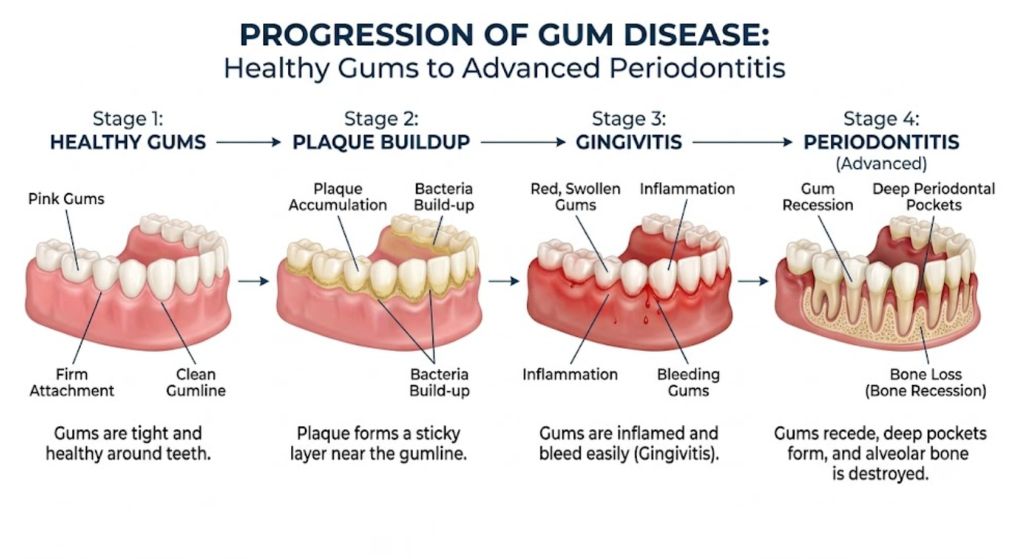
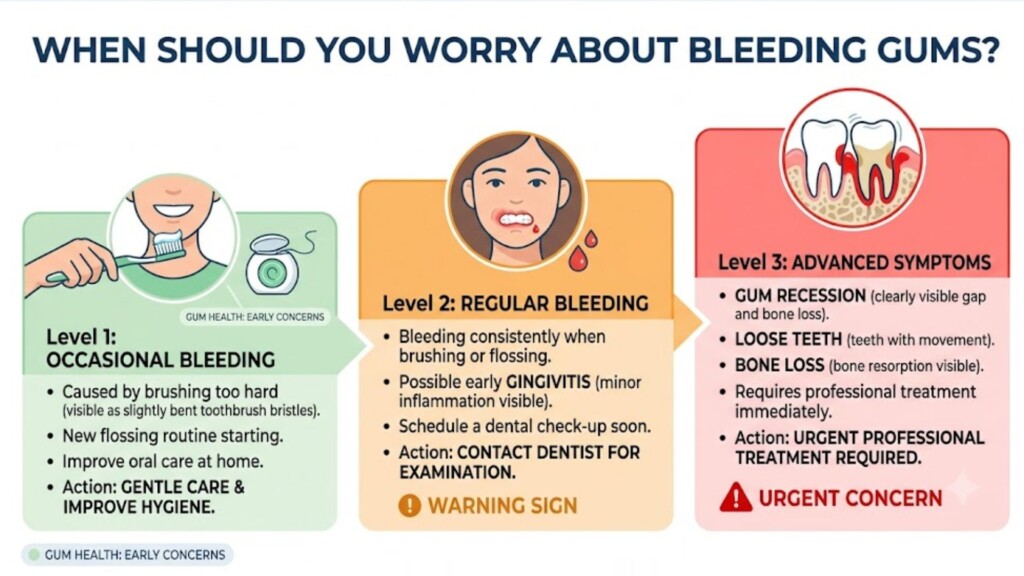
If your gums bleed occasionally after brushing too hard or starting a new flossing routine, the cause may be temporary. However, if the bleeding happens regularly, it’s often an early sign of gingivitis, the mildest form of gum disease. The good news is that gingivitis is usually reversible when treated early.
When gingivitis is left untreated, it can progress to periodontitis. This more advanced stage of gum disease affects the tissues and bone that support your teeth, increasing the risk of gum recession, loose teeth, and even tooth loss.
While it’s impossible to diagnose gum disease based on symptoms alone, understanding the differences can help you decide when it’s time to schedule a dental visit.
Bleeding Gums vs. Gingivitis vs. Periodontitis
| Feature | Bleeding Gums | Gingivitis | Periodontitis |
|---|---|---|---|
| What it means | A symptom | Early gum disease | Advanced gum disease |
| Main cause | Irritation or inflammation | Plaque buildup | Untreated gum infection |
| Gum appearance | Depends on cause | Red and swollen | Receding or damaged gums |
| Bleeding | Occasional or frequent | Common | Common |
| Bone loss | No | No | Possible |
| Treatment | Depends on cause | Usually reversible | Requires professional management |
Dentist Tip: Don’t Wait Until Gum Bleeding Becomes Painful
Many patients delay dental visits because bleeding gums do not always hurt. However, gum disease can progress silently. Regular dental examinations allow your dentist to identify inflammation early and prevent more serious problems.
Signs Your Bleeding Gums May Be Linked to Gum Disease
Bleeding gums are rarely the only sign of an underlying oral health problem. As gum inflammation progresses, you may notice other changes in your gums, teeth, or even your breath. Recognizing these signs early can help you seek treatment before the condition develops into more advanced gum disease.
| Signs | What it may indicate |
|---|---|
| Red gums | inflammation |
| Swollen gums | gingivitis |
| Bad breath | plaque buildup |
| Gum recession | progressing gum disease |
| Loose teeth | advanced periodontal disease |
| Pus | infection |
What to Do When Your Gums Start Bleeding?
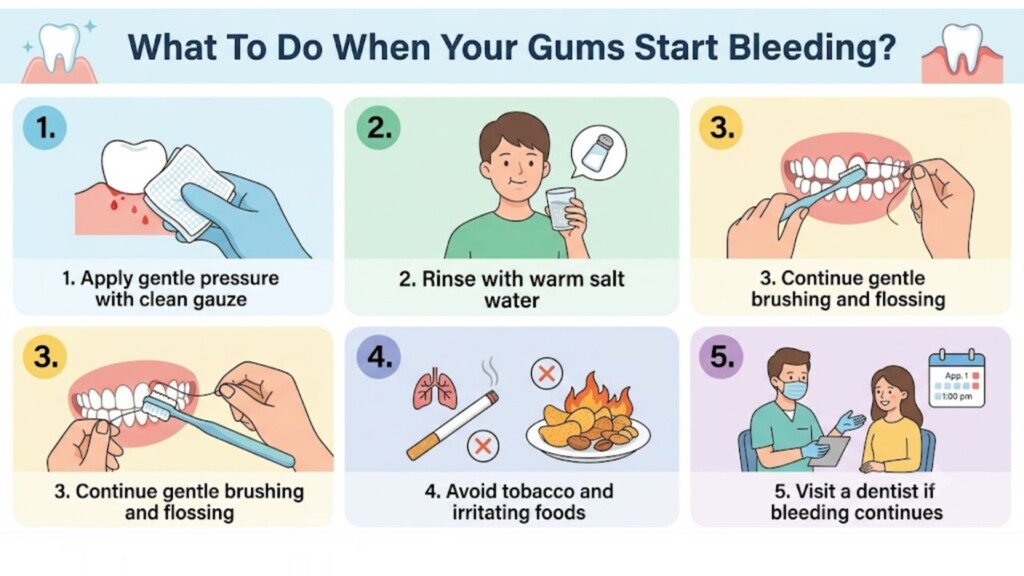
If your gums start bleeding, these steps may help:
Apply Gentle Pressure
Place clean gauze or a clean cloth over the bleeding area and apply gentle pressure for a few minutes.
Avoid rubbing the area because it may increase irritation.
Rinse With Warm Salt Water
A warm salt water rinse can soothe irritated gums and help keep your mouth clean.
Mix half a teaspoon of salt into a glass of warm water and gently rinse for about 30 seconds.
Use a Cold Compress
If bleeding is accompanied by swelling, a cold compress placed outside your cheek may help reduce discomfort.
Continue Brushing and Flossing
Do not stop brushing because your gums bleed. Skipping oral hygiene allows more plaque to build up, which can make the problem worse.
Use gentle brushing techniques and continue flossing carefully.
Avoid Irritating Your Gums
While your gums are healing, try to avoid habits that can worsen irritation, such as:
- Smoking or using other tobacco products
- Picking at your gums with fingernails or toothpicks
- Eating very hard or sharp foods if they cause discomfort
Note: These steps may temporarily reduce irritation, but they do not treat underlying gum disease or tartar buildup.
Bleeding Gum Treatment Options
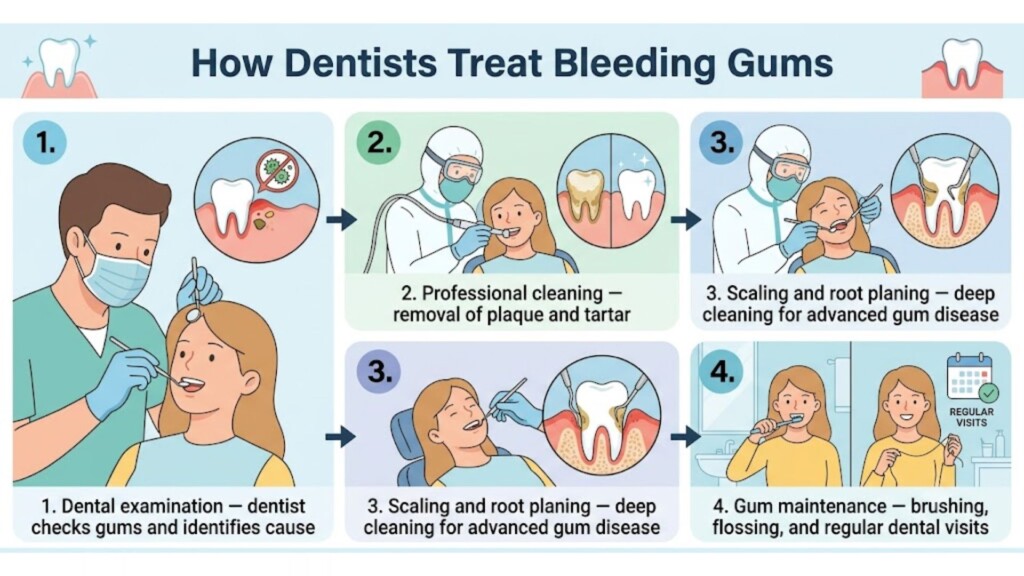
Treatment depends on why your gums are bleeding.
Professional Dental Cleaning
If plaque and tartar buildup are causing gum inflammation, a professional cleaning may be the first step.
During a dental cleaning, a dentist or hygienist removes plaque and tartar buildup that cannot be eliminated with regular brushing and flossing. Removing these deposits helps reduce gum inflammation and allows the gums to begin healing.
For patients with recurring bleeding, your dental team may also evaluate your brushing technique, flossing habits, and risk factors that may contribute to gum problems.
Scaling and Root Planing
For patients with deeper gum infection, scaling and root planing may be recommended.
This deep cleaning removes plaque and tartar buildup below the gumline and helps reduce harmful bacteria, allowing the gums to heal.
Treatment of Underlying Causes
Sometimes improving gum health requires addressing other contributing factors, including:
- Smoking
- Diabetes management
- Medication-related concerns
- Nutritional deficiencies
A complete evaluation helps create the right treatment plan.
Long-Term Gum Maintenance
Successful treatment doesn’t end once the bleeding stops. Maintaining healthy gums requires consistent brushing, daily flossing, regular professional cleanings, and routine dental check-ups. These habits help prevent plaque from building up again and reduce the risk of gum disease returning.
People who have been treated for gum disease may also benefit from more frequent periodontal maintenance visits to keep their gums healthy over the long term.
At Robison Associates, our team evaluates bleeding gums by identifying the underlying cause rather than only treating the symptom. Depending on your gum health, treatment may include professional cleaning, periodontal therapy, or personalized home-care recommendations.
Why Dentists Take Bleeding Gums Seriously
Bleeding gums are more than just a minor inconvenience. They can be an early sign that bacteria and inflammation are affecting the tissues that support your teeth.
During a dental examination, your dentist looks beyond the bleeding itself to identify the underlying cause. They may evaluate:
- Plaque and tartar buildup: Hardened deposits around the teeth can irritate the gums and contribute to inflammation.
- Gum inflammation: Redness, swelling, tenderness, and bleeding help determine the severity of gum irritation.
- Gum pocket depth: Your dentist may measure the spaces between your teeth and gums to check for signs of periodontal disease.
- Gum recession: Receding gums may expose tooth roots and indicate progressing gum problems.
- Tooth stability: Loose teeth can be a sign that gum disease has affected the supporting structures around your teeth.
Identifying the cause early allows your dentist to recommend the right treatment, whether that involves professional cleaning, improved home care, or periodontal therapy.
What Happens During a Dental Visit for Bleeding Gums?
When you visit a dentist for bleeding gums, the goal is not only to stop the bleeding but to identify why it is happening. Your dentist will evaluate your gum health, check for signs of infection, and create a treatment plan based on your specific needs.
Your dentist will:
Discuss Your Symptoms
Your dentist may ask:
- When did the bleeding begin?
- Does it happen during brushing or flossing?
- Do you have swelling, pain, or bad breath?
- Are you taking any medications?
Examine Your Gums
Your dentist will check for:
- Plaque buildup
- Gum inflammation
- Gum recession
- Signs of infection
Measure Gum Health
If gum disease is suspected, your dentist may use a small measuring instrument called a periodontal probe to check the depth of the spaces between your teeth and gums. Healthy gums fit closely around the teeth, while deeper pockets can indicate that the infection has spread below the gumline.
Dental X-rays if Needed
Not every patient requires X-rays, but they may be recommended if your dentist needs to evaluate the bone supporting your teeth or look for problems that aren’t visible during the clinical examination. This helps identify any hidden damage and ensures the correct treatment plan is recommended.
Understanding Your Diagnosis
After the examination, your dentist will explain the cause of your bleeding gums and recommend the next steps based on your oral health needs.
Planning the Next Steps
Before you leave, your dentist will discuss the recommended treatment plan and explain what to expect moving forward. Depending on the cause of the bleeding, this may involve scheduling a professional cleaning, periodontal treatment, or follow-up visits to monitor your gum health.
Can Bleeding Gums Heal on Their Own?
It depends on the cause.
If bleeding happens because of brushing too hard or temporary irritation, it may improve within a few days after changing your habits.
However, bleeding caused by plaque buildup or gum disease usually requires treatment.
Even if the bleeding stops temporarily, the underlying cause may still be present. Ignoring recurring bleeding can allow gum disease to progress silently, increasing the risk of gum recession, bone loss, and eventually tooth loss.
At times, an early dental evaluation can identify the cause and help prevent more serious complications.
What Happens If You Ignore Bleeding Gums?
Ignoring bleeding gums can allow gum disease to progress.
Untreated gum disease may lead to:
- Gum recession
- Bone loss around teeth
- Loose teeth
- Tooth loss
Because gum disease often develops slowly, early treatment is the best way to protect your oral health.
How to Prevent Bleeding Gums
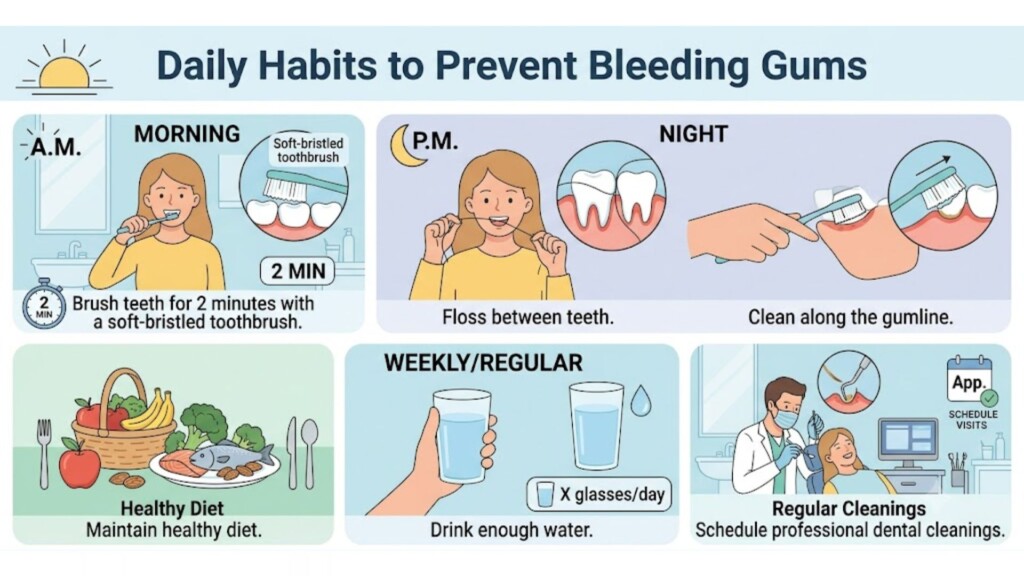
Brush Gently Twice Daily
Use a soft-bristled toothbrush and brush for two minutes twice daily.
Floss Daily
Flossing removes plaque between teeth where your toothbrush cannot reach.
Schedule Regular Dental Cleanings
Professional cleanings remove tartar buildup and allow your dentist to identify problems early.
Eat a Balanced Diet
Foods rich in vitamins and minerals support healthy gums and healing.
Drink Enough Water
Good hydration supports saliva production, which helps protect your mouth from harmful bacteria.
Avoid Tobacco
Stopping smoking improves gum health and reduces your risk of gum disease.
When Should You See a Dentist for Bleeding Gums?
Schedule a dental appointment if:
- Your gums bleed regularly
- Bleeding continues for more than one to two weeks
- Your gums are swollen or painful
- You have persistent bad breath
- Your gums are pulling away from your teeth
- Your teeth feel loose
- You notice pus around your gums
At Robison Associates, our dental team focuses on identifying the underlying reason behind bleeding gums. Through a detailed gum evaluation, we can determine whether the issue is related to plaque buildup, gingivitis, periodontal disease, or another contributing factor and recommend a personalized treatment approach.
Conclusion
Bleeding gums are often a sign that your gums need attention. While occasional bleeding may happen because of irritation, frequent bleeding is usually a sign of inflammation or gum disease.
The earlier you address bleeding gums, the easier it is to treat the problem. Regular brushing, flossing, professional cleanings, and timely dental visits can help keep your gums healthy.
If your gums bleed regularly, schedule a visit with Robison Associates. Our team can identify the cause of your bleeding gums and recommend personalized treatment to help restore your gum health.