

Key Takeaways
- Saves Your Natural Tooth: Removes infected tissue inside the tooth and seals it to prevent future bacterial damage.
- Virtually Painless: Local anesthetic keeps you comfortable during the procedure; most patients feel only mild pressure.
- Treatments Beat Antibiotics: ADA guidelines emphasize direct dental treatment—not antibiotics—to resolve localized tooth infections.
- Restoration Is Essential: Getting a final crown or filling is crucial to protect the tooth from cracking or reinfection.
- Watch for Warning Signs: Seek immediate care if you develop severe pain, facial swelling, high fever, or trouble breathing.
Root canal treatment removes inflamed or infected tissue from inside a tooth, cleans the narrow canals in its roots, and seals them to prevent bacteria from returning. The procedure is usually completed under local anesthetic, so you should not feel sharp pain. Mild soreness afterwards is common, but worsening pain, fever or facial swelling needs prompt dental care.
What Is Root Canal Treatment?
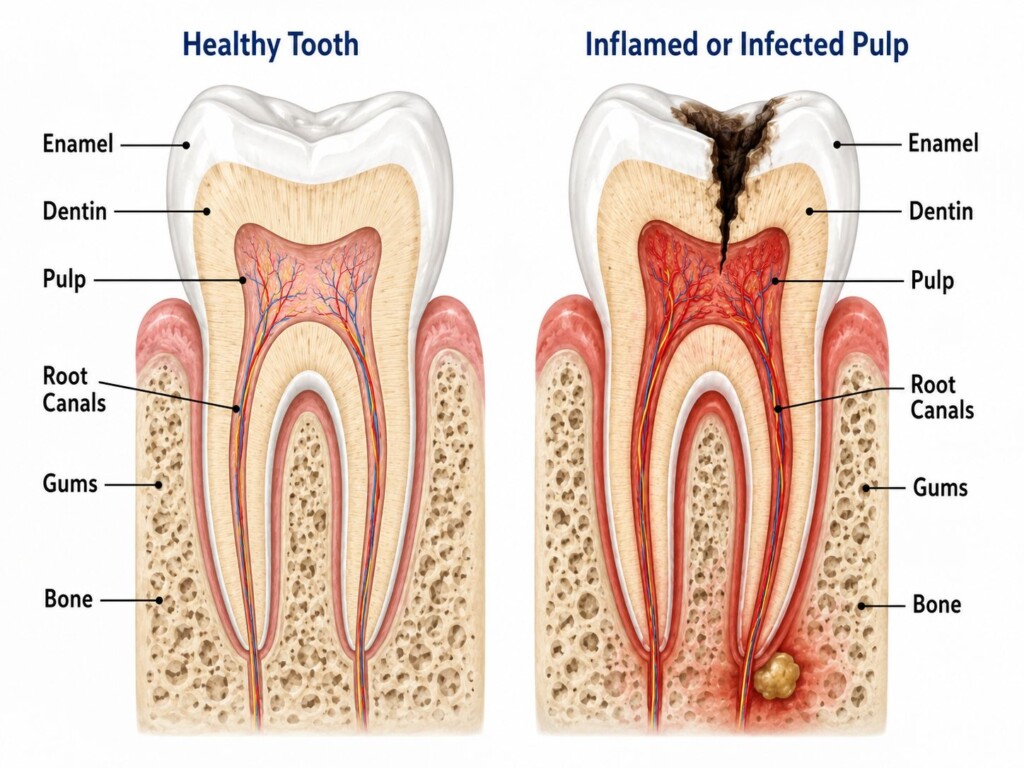
A tooth has several layers. Enamel covers the outside. Dentin sits underneath it. At the centre is the pulp, a soft area containing nerves, blood vessels and connective tissue.
The pulp extends into narrow spaces inside the roots. These spaces are the root canals.
When the pulp becomes badly inflamed, infected or dead, a dentist removes it. The canals are then cleaned, shaped, filled and sealed. This tooth root canal process is designed to stop infection while keeping the natural tooth in place.
What Is a Root Filling?
A root filling is the material used to fill the cleaned canals inside the roots. Dentists commonly use a rubber-like material called gutta-percha together with a sealer.
A root filling is not the same as the filling or crown placed on top of the tooth. The root filling seals the inside. The final restoration protects the remaining tooth above the gum.
Why Might You Need Root Canal Treatment?
The pulp can become inflamed or infected because of:
- Deep tooth decay
- A crack or chip
- A strong blow to the tooth
- Repeated dental work on the same tooth
- A damaged or leaking filling or crown
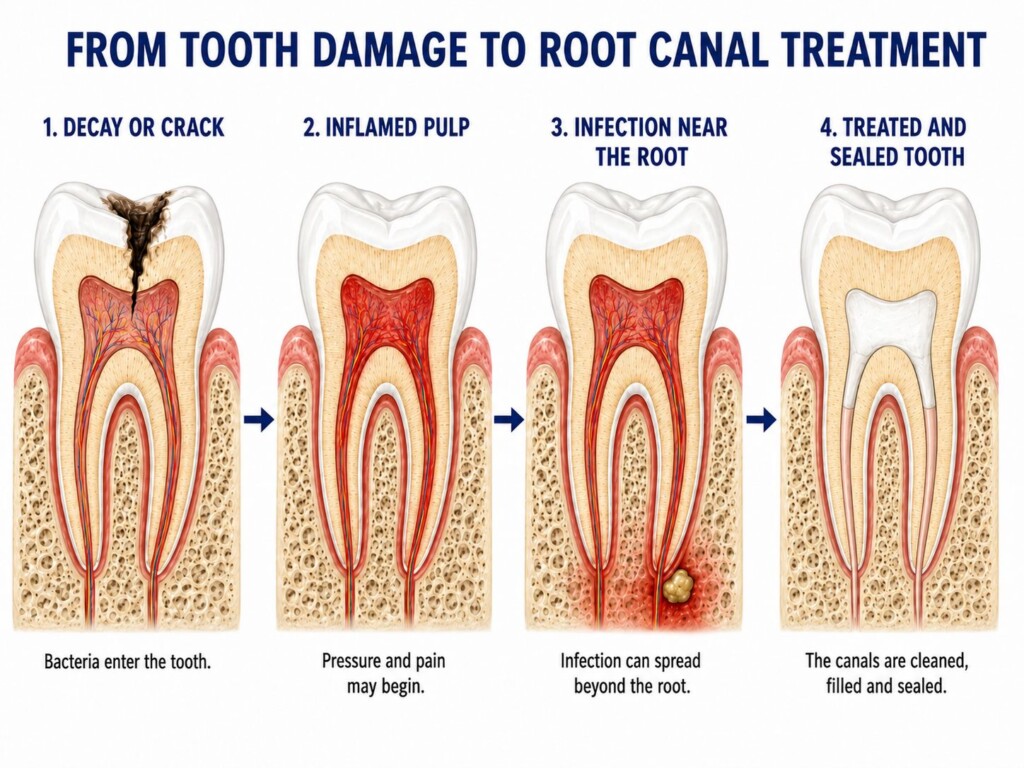
Bacteria may enter through the damaged area and reach the pulp. The tissue can then swell inside the hard tooth, causing pressure and pain. Infection may spread through the root tip into the nearby gum and bone.
Pain may sometimes decrease when the pulp dies. This does not mean that the problem has healed. Infection can remain around the root even when the tooth no longer reacts to hot or cold.
Symptoms That May Point to an Infected Tooth
Possible root canal symptoms include:
- Severe or lasting toothache
- Pain when biting or chewing
- Sensitivity to hot or cold that continues after the trigger is removed
- A swollen or tender gum
- A small bump or spot on the gum
- Tooth darkening
- A cracked or badly damaged tooth
- Facial or jaw swelling
Some infected teeth cause few symptoms and are found during a dental examination or X-ray.
When Tooth Pain or Swelling Needs Urgent Care
Seek urgent dental help if swelling is increasing, pain is severe or you develop a fever or feel generally unwell.
Get emergency medical help if swelling affects your breathing or swallowing, spreads towards your eye or neck, or makes it difficult to open your mouth. These symptoms may suggest that the infection is spreading.
How Dentists Confirm Whether You Need Treatment
A dentist will ask about your symptoms and examine the tooth, gums and surrounding area. They may test how the tooth reacts to cold, heat, pressure or tapping.
Dental X-rays help show the roots, nearby bone, previous treatment and possible signs of infection. X-rays may also be taken during or after the root canal procedure to check the working length and final filling.
Difficult cases may be referred to an endodontist, a dentist with advanced training in treating the inside of teeth.
Who May Need Extra Planning?
Tell your dentist about your health conditions, allergies and all medicines or supplements you take.
Extra planning may be needed if you:
- Take blood thinners
- Have a weakened immune system
- Have certain heart conditions
- Are pregnant
- Have medication allergies
- Have severe dental anxiety
- Have previously had difficulty becoming numb
- May need sedation
Do not stop prescribed medicine unless the clinician who manages it tells you to do so.
Local anesthetic numbs the tooth. Sedation helps some people relax but does not replace numbing. You may need someone to take you home if sedation is used.
What Happens During the Root Canal Procedure?
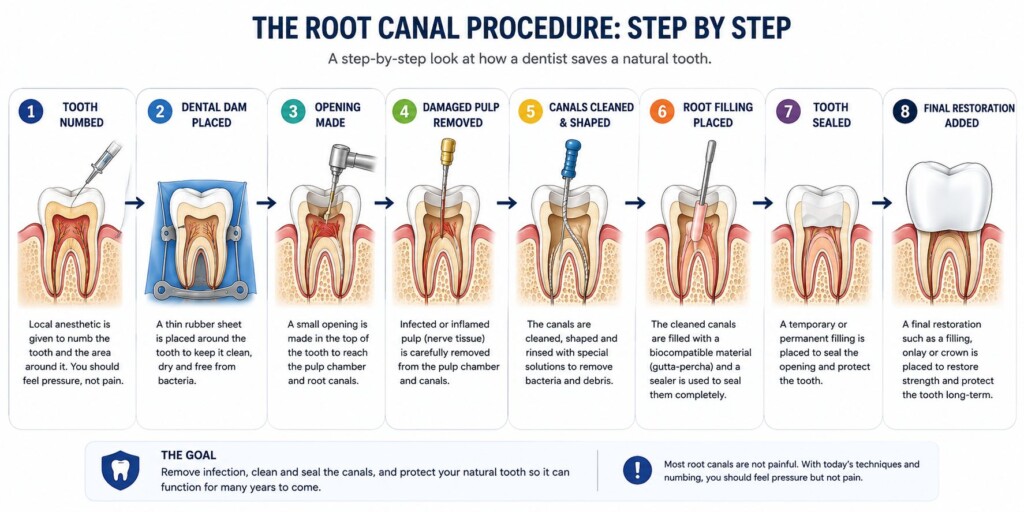
The Tooth Is Numbed
The dentist gives a local anesthetic around the tooth. You may feel pressure or vibration during treatment, but you should tell the dentist if you feel sharp pain.
The Tooth Is Kept Clean and Dry
A rubber sheet called a dental dam is placed around the tooth. It keeps saliva and bacteria away from the treatment area.
The Dentist Opens the Tooth
A small opening is made through the top of the tooth to reach the pulp chamber and root canals.
The Damaged Pulp Is Removed
Small dental instruments remove inflamed, infected or dead tissue from inside the tooth.
The Canals Are Cleaned and Shaped
The narrow canals are enlarged carefully and rinsed with cleaning liquid. This removes tissue and reduces bacteria inside the tooth.
The Canals Are Filled and Sealed
The cleaned spaces are dried, filled with root-filling material and sealed to reduce the chance of bacteria entering again.
The Tooth Is Closed
A temporary or permanent filling closes the opening. A temporary filling may be used if treatment requires another appointment.
The Tooth Receives Its Final Restoration
The tooth may need a filling, onlay or crown. The correct choice depends on where the tooth is, how much healthy structure remains and how much chewing pressure it carries.
Back teeth often need stronger protection, but not every root-canal-treated tooth automatically needs a crown.
Are Root Canals Painful?
Modern root canals are normally performed under local anesthetic. Most patients feel pressure rather than sharp pain during treatment. The inflammation or infection that led to treatment may cause more pain than the procedure itself.
Does a root filling hurt? The filling is placed after the tooth has been numbed and the pulp has been removed, so placing it should not cause sharp pain. However, the tissues around the root can remain tender for a few days.
How Long Does a Root Canal Take?
A root canal may be completed in one visit or require two or more appointments. Each visit can range from about 60 to 90 minutes, although simple cases may be shorter and complex cases may take longer.
Treatment time depends on:
- The tooth being treated
- The number and shape of its canals
- The amount of infection
- Whether previous root filling must be removed
- Whether a specialist is needed
- When the final restoration is placed
Root Canal Recovery: What Is Normal?
The First Few Hours
Your mouth may remain numb. Avoid chewing until normal feeling returns so you do not bite your cheek, lip or tongue.
The First Few Days
Mild soreness, tenderness when biting and minor inflammation can occur. These symptoms should gradually improve.
A dentist may recommend an over-the-counter pain reliever if it is safe for you. Follow the label and your dentist’s instructions. Ask before taking pain medicine if you have kidney or liver disease, stomach ulcers, take blood thinners, are pregnant or have been told to avoid certain medicines.
Eating and Caring for the Tooth
Choose softer foods if the tooth feels tender. Avoid hard, sticky or crunchy foods while a temporary filling is in place.
Brush and floss normally unless your dentist gives different instructions. Attend the follow-up appointment for the final restoration.
Contact the dental office if:
- Pain is severe or getting worse
- Swelling develops or increases
- Your bite feels uneven
- A temporary filling falls out
- The tooth cracks
- Symptoms return after improving
Root canal recovery time is not the same for every part of healing. Numbness usually wears off within hours, soreness may settle over several days, and healing in the bone around the root can take much longer.
Can a Root Canal Fail?
A treated tooth may become infected again if:
- A canal was difficult to find or clean
- Bacteria remained inside
- New decay developed
- The filling or crown leaked
- The final restoration was delayed
- The tooth cracked
Possible treatments include root canal retreatment, surgery around the root tip or extraction.
Antibiotics do not usually replace dental treatment because they do not remove infected tissue from inside the tooth. The American Dental Association recommends dental treatment rather than antibiotics for most localized pulp and root infections. Antibiotics may be needed when infection causes fever, general illness or spreading swelling.
Limits of Root Canal Treatment
Not every tooth can be saved. Root canal treatment may not be suitable when:
- A crack extends deeply into the root
- The root has a vertical fracture
- Too little healthy tooth remains
- The tooth cannot hold a secure restoration
- Gum or bone support is poor
- Severe damage makes the canals impossible to treat predictably
The dentist must consider both whether the canals can be cleaned and whether the tooth can function after restoration.
Root Canal Treatment or Tooth Extraction?
| Feature | Root Canal Treatment | Tooth Extraction |
|---|---|---|
| Primary Goal | Saves and preserves the natural tooth | Removes the tooth entirely |
| Post-Treatment Restorations | May require a filling, onlay, or full crown to restore strength | Space can be left empty, or replaced with an implant, dental bridge, or removable denture |
| Ideal Dental Conditions | Best for teeth with sufficient healthy structure and good bone/gum support | Best for deeply fractured, severely compromised, or unrestorable teeth |
| Decision Factors | Chosen based on tooth restorability, gum and bone support, general health, cost, and patient preference | Chosen when the tooth cannot be saved, or based on cost, health, and patient preference |
What Changes Before and After Treatment?
Before treatment, the tooth may contain inflamed or dead pulp, bacteria and infection around the root.
After treatment, the pulp has been removed, the canals have been cleaned and filled, and the opening has been sealed. The tooth no longer contains living pulp, but the tissues around it remain alive. This is why it can still feel pressure and can become sore.
Conclusion
Root canal treatment removes damaged tissue from inside a tooth and seals the canals. Local anesthetic normally controls pain during the procedure. Mild soreness afterwards can be normal, but worsening pain, fever, facial swelling, or trouble swallowing or breathing needs urgent attention. Completing the final restoration and attending follow-up visits are important for protecting the tooth.