

If your tooth has been throbbing and nothing is making it better, you are probably dealing with a tooth abscess. It is a bacterial infection inside or around your tooth, and unlike a regular toothache, it does not go away on its own.
The good news is it is treatable. But knowing your symptoms, understanding what caused it, and recognizing when it becomes an emergency can make a real difference in how fast you recover and whether you keep your tooth.
Here we have covered all of it.
What Is a Tooth Abscess?
A tooth abscess is a localized bacterial infection that creates a pocket of pus inside the tooth, in the gums, or in the bone holding the tooth in place. That pus is made up of dead tissue, white blood cells, and bacteria.
Bacteria typically enter through a cavity, a crack, or damaged gum tissue. Once inside, they multiply in the warm, moist environment of the dental pulp, the soft inner tissue of your tooth containing nerves and blood vessels. The infection causes inflammation, pressure builds, and that pressure is what creates the intense, unrelenting pain most people describe.
An abscessed tooth is not the same as a regular toothache. A toothache may come and go, especially with hot or cold foods. An abscess causes continuous, often severe pain that does not let up.
3 Types of Dental Abscess (And Why the Difference Matters)
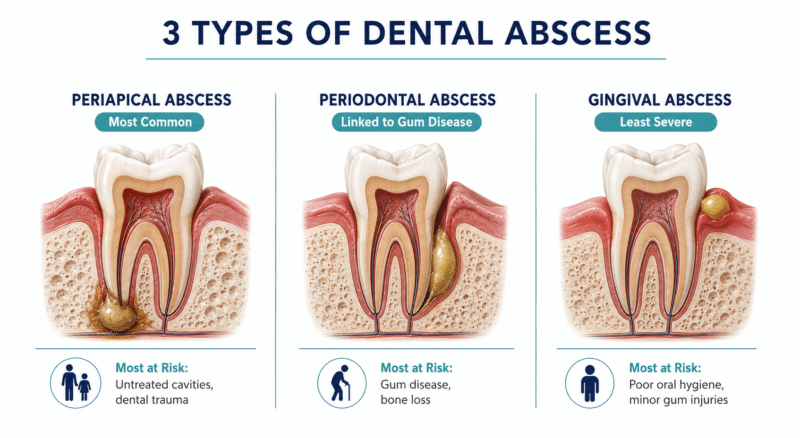
Not all abscesses are the same. Dentists classify them by where the infection originates, and that location determines how it is treated.
1. Periapical Abscess (Root Tip)
The most common type. It forms at the tip of the tooth root when bacteria infect the dental pulp, usually through deep decay or a cracked tooth. The infection travels down through the root and collects at the base in the surrounding bone. Most root canals are performed to treat this type.
2. Periodontal Abscess (Gum and Bone)
This type originates in the gum and supporting bone beside the tooth root rather than inside the tooth itself. It is more common in patients with existing gum disease. Periodontal abscesses tend to spread faster to surrounding bone and tissue. At Robison Dental, Dr. Robison offers laser gum therapy that addresses periodontal infections with significantly more comfort than traditional methods.
3. Gingival Abscess (Gum Surface)
A gingival abscess forms on the gum surface, often when a foreign object like a food particle or piece of a toothpick that becomes lodged in gum tissue. It does not usually involve the tooth or bone directly, making it the least severe of the three, though it still requires professional treatment.
Periapical vs. Periodontal Abscess at a Glance
| Periapical Abscess | Periodontal Abscess |
|---|---|
| Starts inside the tooth pulp | Starts in the gum or bone beside the root |
| Caused by decay, crack, or trauma | Caused by gum disease or trapped debris |
| Pain is deep and continuous | Pain may also involve gum tenderness and bleeding |
| Treated with root canal or extraction | Treated with deep cleaning, draining, or laser therapy |
| May not show visible gum changes | Often causes visible gum swelling or a pimple on gums |
Symptoms of a Tooth Abscess: What to Watch For
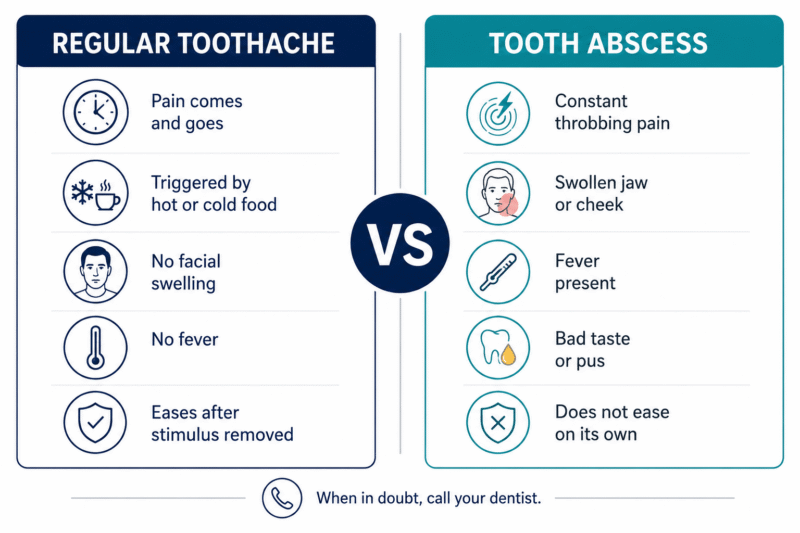
Knowing which category your symptoms fall into can protect your life. Severe tooth pain, gum swelling, fever, bad breath, and swollen lymph nodes are among the common symptoms of an abscessed tooth.
Common Symptoms of a Tooth Abscess
- Severe, throbbing toothache that is continuous and does not go away
- Pain that radiates to your jaw, ear, or neck
- Sensitivity to hot and cold that lingers after the source is removed
- Pain when biting down or chewing
- Swollen, red gums
- A pimple-like bump on the gum that may ooze pus (fistula or sinus tract)
- Foul taste in your mouth or persistent bad breath
- Swollen jaw or face
- Swollen lymph nodes in the neck or under the jaw
- Fever
When Does a Dental Abscess Become an Emergency?
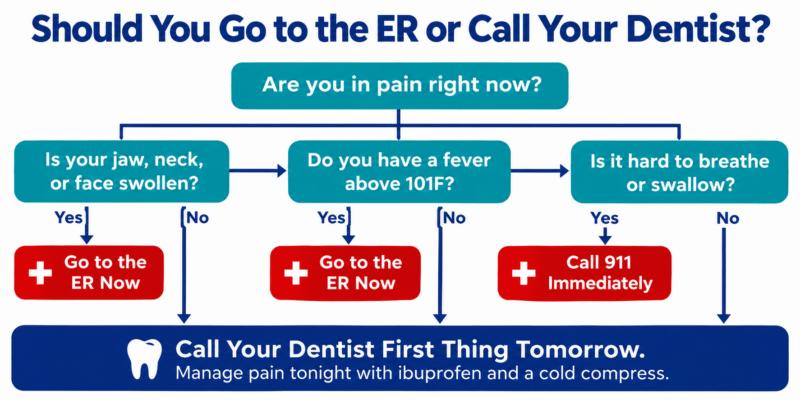
A tooth abscess is always serious, but the following signs mean the infection has spread beyond the tooth and is threatening your airway, brain, or vital organs. Do not call your dentist. Go to the emergency room or call 911 immediately.
Go to the ER Right Now If You Have:
These are signs of a potentially life-threatening spreading infection. Ludwig’s angina (infection of the floor of the mouth) and sepsis (blood infection) are two rare but fatal complications of untreated dental abscesses.
What Causes a Tooth Abscess?
Dental abscesses happen when bacteria find their way into parts of the tooth or gum where they normally do not belong. This almost always happens because of one of the following:
Primary Causes
- Untreated tooth decay: A cavity that reaches the inner pulp gives bacteria a direct pathway into the tooth.
- Cracked or chipped tooth: Even a hairline crack can let bacteria in, especially in back molars under heavy chewing pressure.
- Gum disease (gingivitis or periodontitis): Advanced gum disease creates deep pockets along the root where bacteria can thrive.
- Previous dental work: A filling, crown, or root canal that does not seal properly can allow bacteria to re-enter.
- Dental trauma: A knocked-out or injured tooth, even one that does not hurt immediately, can develop an abscess weeks or months later.
- Wisdom tooth problems: Partially erupted wisdom teeth create a flap of gum tissue where food and bacteria collect.
Who Is at Higher Risk?
- People with poor oral hygiene or infrequent dental visits
- Anyone with untreated cavities or cracked teeth
- Patients with diabetes or autoimmune conditions
- People undergoing chemotherapy or radiation (suppressed immune system)
- Those with chronic dry mouth from medications or aging
- People who consume high amounts of sugary foods and drinks regularly
Tooth Abscess in Children: What Parents Should Know
Children can develop abscesses in both baby teeth and permanent teeth. Because baby teeth have thinner enamel, decay spreads faster and an abscess can develop more quickly than in adults.
Signs to watch for in kids: refusing to eat, pointing to a sore area in the mouth, swollen cheek or jaw, fever with no clear cause, or a visible bump on the gum near a tooth.
Parents often wonder: should a baby tooth with an abscess be saved or pulled? The answer depends on the tooth and the infection. Losing a baby tooth too early can affect the spacing of permanent teeth. Dr. Robison evaluates each case individually and treats every member of your family, from young children to grandparents.
What to Do Right Now: Home Care While You Wait for Your Appointment
If you suspect a tooth abscess, contact your dentist as soon as possible. While you wait, these steps can make the wait more bearable. They do not treat the infection. They only manage discomfort.
What You Can Safely Do
- Over-the-counter pain relief: Ibuprofen (Advil, Motrin) is more effective than acetaminophen for dental infections because it also reduces inflammation. Follow package directions.
- Warm salt water rinse: Dissolve ½ tsp of salt in 8 oz of warm water. Rinse gently for 30 seconds, then spit. This helps flush the area and may ease gum soreness.
- Cold compress: Apply an ice pack wrapped in a cloth to your cheek in 15-minute intervals to reduce swelling.
- Elevate your head: Lying flat increases blood pressure to your head and intensifies throbbing. Sleep with an extra pillow.
- Avoid very hot or cold foods: Both can aggravate sensitivity in the affected tooth.
What You Can Not Safely Do
- Do not try to pop or drain the abscess yourself. This risks pushing infection deeper.
- Do not place aspirin directly on the tooth or gum. It will not reach the infection and can cause a chemical burn.
- Do not delay care hoping it will resolve on its own. It will not.
Tooth Abscess Treatment Options
There is no single treatment for all dental abscesses. The right approach depends on the type of abscess, how far the infection has spread, and the condition of the tooth.
1. Draining the Abscess
For many abscesses, the first step is making a small incision to drain the pus and relieve pressure. This provides immediate pain relief. The area is then rinsed with saline solution. If a fistula has already formed on the gum, your dentist may use this natural opening to assist drainage.
2. Root Canal Treatment
A root canal is the preferred treatment for a periapical abscess when the tooth can still be saved. The dentist removes the infected pulp, cleans and shapes the root canals, then seals the tooth. In most cases, a crown is placed afterward. Contrary to its reputation, a root canal performed under modern anesthesia is no more uncomfortable than getting a filling.
3. Tooth Extraction
When a tooth is too damaged to save, removal is necessary. After extracting the tooth, the dentist drains and cleans the surrounding area. Tooth replacement options such as dental implants or bridges, can be discussed once the infection has fully resolved.
4. Antibiotics
Antibiotics alone cannot cure a tooth abscess. They do not penetrate the pus pocket effectively enough to eliminate the infection at its source. However, they play an important supporting role when the infection has spread to surrounding tissue or when your immune system is compromised.
Common Antibiotics Prescribed for Dental Abscesses
| Antibiotic | When It Is Used |
|---|---|
| Amoxicillin | First-line choice for most patients without penicillin allergy |
| Amoxicillin + Clavulanate | Broader coverage for more complex or spreading infections |
| Clindamycin | Preferred alternative for patients allergic to penicillin |
| Metronidazole | Often combined with amoxicillin for enhanced anaerobic coverage |
5. Laser Gum Therapy for Periodontal Abscess
For patients with a periodontal abscess, Dr. Robison offers laser gum treatment as an alternative to traditional surgical drainage. The laser precisely targets and eliminates infected gum tissue while leaving healthy tissue untouched. It causes less bleeding, less post-procedure swelling, and a faster recovery than conventional methods. That is one reason patients describe care at Robison Dental as more like a spa visit than a dental appointment.
6. Foreign Object Removal
If a gingival abscess was caused by a trapped foreign object such as a piece of food, bone fragment, or broken toothpick. The dentist locates and removes it, drains the area, and flushes it with saline. This type of abscess typically resolves quickly once the cause is eliminated.
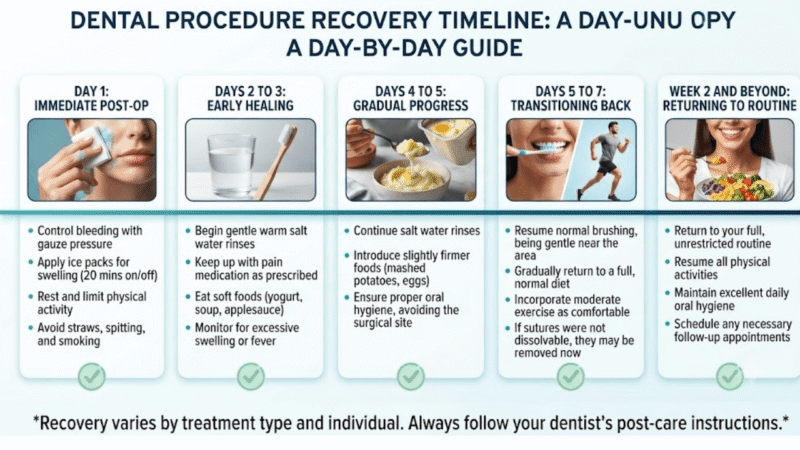
Recovery Timeline: What to Expect After Treatment
Patients frequently search for this after leaving the dentist’s office. Here is a realistic, day-by-day overview:
| Timeframe | What to Expect |
|---|---|
| Day 1 | Some soreness and swelling after the procedure. Take prescribed medication as directed. Rest and eat soft foods. Apply ice pack in 15-minute intervals. |
| Days 2–3 | Swelling begins to reduce. Pain should decrease noticeably with antibiotics and pain medication. Fever, if present, should start to drop. |
| Days 4–5 | Most patients return to normal activities. Pain should be manageable with over-the-counter medication only. |
| Days 5–7 | Antibiotic course typically finishes. Follow-up appointment with Dr. Robison to confirm healing. |
| Week 2 and beyond | For root canal patients, crown placement is scheduled once healing is confirmed. Full resolution of bone changes on X-ray may take several weeks to months. |
Complications of an Untreated Tooth Abscess
A dental abscess is never just a toothache. Without treatment, the infection progresses through predictable and increasingly dangerous stages.
- Spread to surrounding bone (osteomyelitis): Bacterial infection can consume jawbone, leading to bone death and structural damage.
- Cellulitis: The infection spreads into soft facial tissue, causing rapidly spreading redness, warmth, and swelling.
- Ludwig’s angina: A severe form of cellulitis on the floor of the mouth that can close the airway. This is a true medical emergency.
- Sepsis: When bacteria enter the bloodstream, the immune system triggers a whole-body inflammatory response that can lead to organ failure and death.
- Mediastinitis: Infection spreads to the mid-chest cavity and threatens the heart and lungs.
- Cavernous sinus thrombosis: A rare complication where infection spreads to the brain’s venous sinus, causing meningitis or brain abscess.
- Link to cardiovascular disease: Chronic dental infections have been studied in connection with heart disease. Research suggests oral bacteria can enter the bloodstream and contribute to inflammation in blood vessels over time.
- Maxillary sinusitis: An abscess in an upper back tooth can breach the floor of the maxillary sinus, causing sinus infection alongside the dental infection.
How to Prevent a Tooth Abscess
Prevention is always better than treatment, especially for a condition this serious.
- Brush twice daily with fluoride toothpaste for at least two minutes each time.
- Floss once daily to remove food and bacteria from between teeth and along the gumline.
- See your dentist every six months for a cleaning and checkup, or more often if recommended.
- Address cavities and cracked teeth promptly. Small problems become big infections.
- Limit sugary foods and drinks, especially between meals.
- Replace your toothbrush every three to four months.
- Ask your dentist about fluoride rinses if you are at higher risk of decay.
- If you grind your teeth at night, a nightguard protects against cracks that can lead to abscesses.
Tooth Pain in Colorado Springs? Robison Dental Can Help.
If you are experiencing tooth pain, swelling, or any of the symptoms above. Don’t wait.A tooth abscess will not go away on its own, even if the pain temporarily improves. Early treatment can relieve discomfort, protect your natural tooth, and prevent the infection from spreading. If you notice persistent tooth pain, swelling, fever, or a bad taste in your mouth, seek dental care promptly. For trusted dental care in Colorado Springs, contact our dental team to schedule an evaluation and treatment.
Schedule your appointment today and protect your smile before a small problem becomes a big one.



Leave A Comment
You must be logged in to post a comment.