
A dead tooth is a tooth that has lost its blood supply and nerve function inside the pulp. It can happen after an injury, deep decay, or a large filling, and it does not always hurt right away.
Some people notice pain immediately, while others only notice a change in color. In our Colorado Springs office, we often see both types of cases, and the outcome usually depends on how quickly the tooth gets treated.
Here is everything you need to know about spotting one, understanding why it happens, and what to do next.
How a Tooth Actually Dies
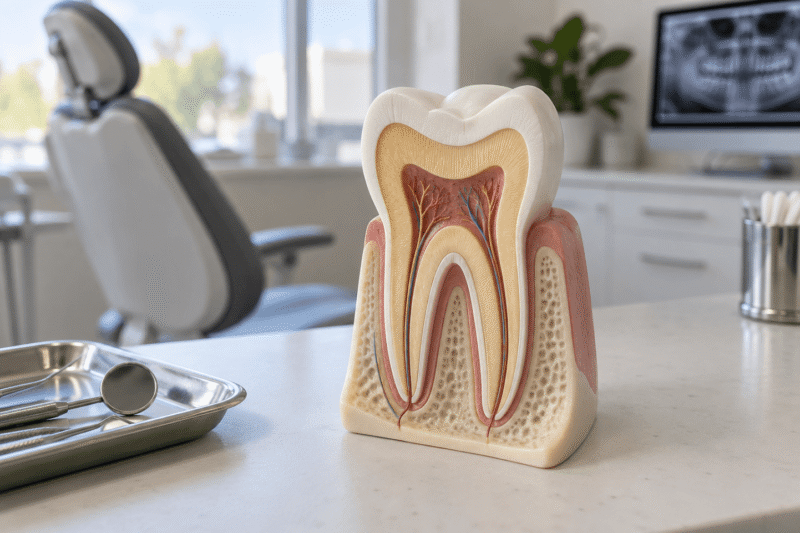
A tooth dies when the pulp, the innermost layer containing nerves and blood vessels, is damaged beyond repair. This can happen gradually from deep decay or suddenly after an injury. As the pulp loses its blood supply, the tissue dies, leaving the tooth non-vital even though its outer structure remains intact.
What Causes a Dead Tooth

A dead tooth can develop for several reasons, from untreated decay and dental injuries to cracks, gum disease, and repeated dental work. Let’s go through the main causes that can lead to a dead tooth.
-
Tooth Trauma
A hard hit to the mouth, such as from a fall, a sports injury, or a car accident, can damage the blood vessels inside a tooth. Sometimes the tooth dies within days. Other times, it takes months or even years for the damage to show up.
-
Untreated Tooth Decay
Cavities start on the outer enamel. If they are not treated, they slowly work their way through the dentin and reach the pulp. Bacteria then infect the pulp, cutting off its blood supply and killing the nerve. This is why routine dental checkups and fillings matter so much. Catching decay early stops it before it ever reaches the nerve.
-
Cracks or Fractures
A cracked or fractured tooth can create an opening for bacteria to reach the pulp. If the crack extends deep enough, it can cause infection and damage the tooth’s blood and nerve supply. Without treatment, this damage can eventually lead to pulp death.
-
Advanced Gum Disease
Severe gum disease can damage the tissues and bone that support a tooth. As periodontal disease progresses, the infection can affect the tissues around the tooth and damage the tooth’s blood supply. Advanced cases may increase the risk of the tooth becoming non-vital.
-
Repeated Dental Work on the Same Tooth
A tooth that has had multiple large fillings or procedures over the years is more likely to develop nerve damage. Repeated drilling, heat, and pressure can slowly affect the pulp’s ability to stay healthy. In some cases, this can eventually cause the pulp to die.
Dead Tooth Symptoms: How to Tell If a Tooth Is Dying
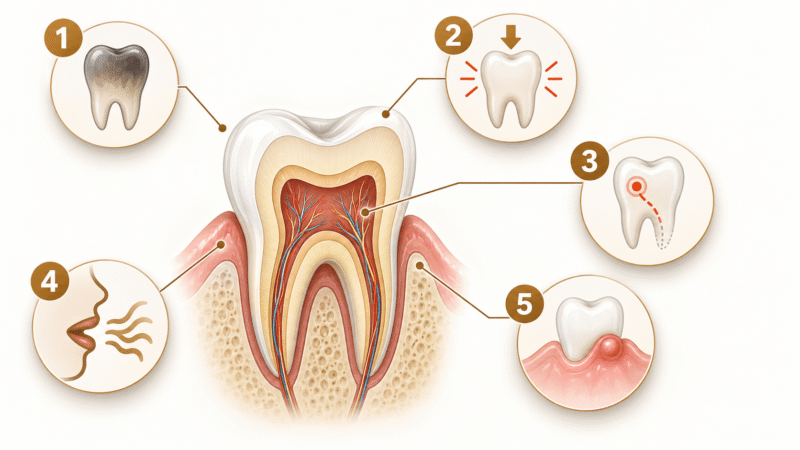
A dying or dead tooth can cause several noticeable changes, including discoloration, sensitivity, pain when biting, or changes around the gum. However, some dead teeth cause little or no pain, so symptoms alone cannot confirm that a tooth has died.
-
Discoloration
A dying tooth often turns a different shade from the surrounding teeth. It can look yellow, gray, brown, or even black. This happens as the tissue inside the tooth breaks down and the blood supply is lost. The discoloration may become more noticeable over time.
-
Changes in How the Tooth Feels
The tooth may feel different when you bite down, or it may become sensitive to hot and cold in a way that lasts longer than usual. Some people may also notice tenderness around the gum line or a feeling that the tooth is slightly loose.
-
Pain or No Pain
A dying tooth may cause pain when biting or chewing, especially when the pulp is still inflamed or infected. However, pain may decrease or disappear once the nerve inside the tooth completely dies. This means a tooth that no longer hurts is not necessarily healthy.
-
Bad Breath or Foul Taste
When bacteria infect the damaged pulp, they can contribute to an unpleasant taste or bad breath. These symptoms may be more noticeable if the tooth has developed an infection.
-
Gum Swelling or Pimple
An infection inside a dead tooth can spread toward the root and cause inflammation in the surrounding tissues. You may notice swelling, tenderness, or a small pimple-like bump on the gum near the affected tooth. This can be a sign of an abscess and should be evaluated by a dentist.
Does a Dead Tooth Hurt?

A dead tooth may cause severe pain, mild discomfort, or no pain at all. When the pulp becomes damaged or infected, pressure can build around the tooth’s root and irritate the surrounding tissues, causing pain when biting or chewing.
As the nerve inside the tooth eventually dies, those pain signals may disappear, making the tooth feel normal even though infection or damage remains underneath. This is why pain alone cannot tell you whether a tooth is healthy. If discomfort suddenly stops after a period of pain, it is still important to have the tooth examined by a dentist.
Dead Tooth Infection and Why It Can Be Dangerous
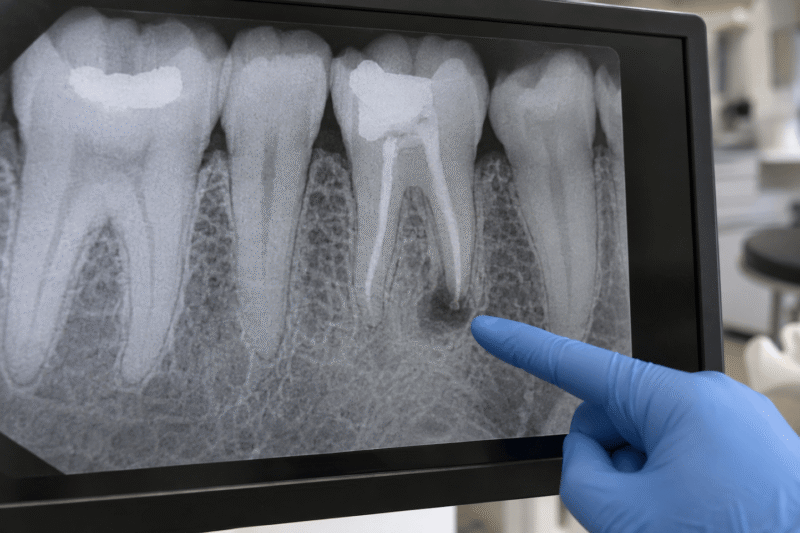
Once the pulp dies, bacteria can enter the space inside the tooth and cause an infection. Without treatment, that infection can progress beyond the tooth.
-
Bacteria multiply inside the tooth: The empty pulp chamber can allow bacteria to grow and spread through the root canals.
-
Pain may disappear: When the nerve dies, pain can fade even though the infection is still active.
-
An abscess can develop: Infection may reach the tip of the root and form a pocket of pus.
-
Surrounding tissues can be affected: The infection can damage the bone supporting the tooth and spread into nearby tissues.
-
More serious spread is possible: Depending on the tooth involved, infection may extend into the face, neck, or nearby sinus.
An untreated dental abscess will not heal on its own and needs professional treatment.
What are the Dead Tooth Treatment Options
The main treatment options for a dead tooth are root canal therapy, which can save the natural tooth, or tooth extraction when the tooth cannot be restored. Your dentist will examine the tooth and may take an X-ray to determine how much healthy tooth structure remains and which treatment is appropriate.
1. Root Canal Treatment (Saving the Tooth)
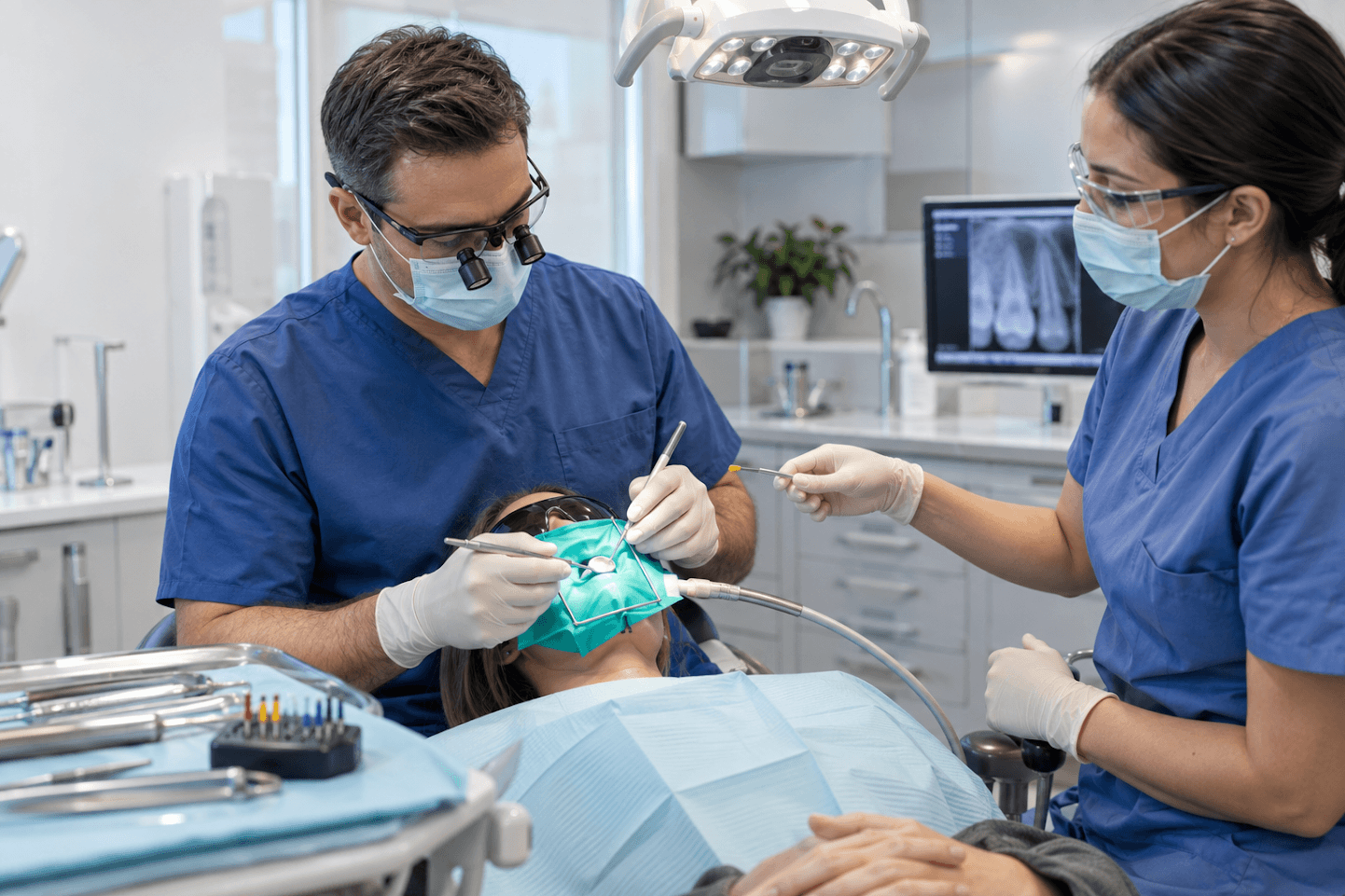
A root canal removes the dead or infected pulp from inside the tooth, cleans the root canals, and seals them to prevent further infection. When the tooth has sufficient healthy structure to be restored, root canal treatment can help you keep your natural tooth.
- The Procedure: The dentist creates an opening in the tooth, removes the dead or infected pulp, cleans and disinfects the root canals, and seals them to help prevent bacteria from entering again.
- Restoration: A treated tooth can become more prone to fracture because it no longer has its original blood supply. A dental crown is often placed afterward to strengthen and protect the tooth, particularly when a significant amount of tooth structure has been lost.
- Cosmetic Treatment: A dead tooth may become discolored. If the tooth remains darker after treatment, your dentist may discuss cosmetic options such as internal bleaching or a veneer to improve its appearance.
2. Tooth Extraction (Removing the Tooth)

If the tooth is too damaged, severely fractured, extensively decayed, or infected to be predictably restored, extraction may be recommended. Removing the tooth eliminates the affected tooth but leaves a space that may need to be replaced.
- The Procedure: The dentist numbs the area and carefully removes the tooth from its socket. The condition of the surrounding bone and tissues will also be considered when planning next steps.
- Replacement Options: Replacing a missing tooth can restore chewing function and help prevent neighboring teeth from shifting into the open space. Depending on your needs, options may include:
- Dental Implants: A titanium implant is placed in the jawbone and supports a replacement crown.
- Dental Bridges: A replacement tooth is supported by neighboring teeth.
- Partial Dentures: A removable appliance fills the space left by the missing tooth.
Treatment Comparison
| Treatment | Best For | What to Expect |
|---|---|---|
| Root canal | A dead tooth that has enough healthy structure to be restored | Dead or infected pulp is removed, the canals are cleaned and sealed, and a crown is often placed afterward |
| Extraction | A tooth that is too damaged, fractured, decayed, or infected to save | The tooth is removed, followed by discussion of replacement options |
Our general dentistry services cover both diagnosis and treatment planning, so you know exactly what to expect before any work begins.
When to See a Dentist for a Dead Tooth
Any sign of a dead or dying tooth is worth a dental visit, even if it is not painful. The earlier it is caught, the more treatment options you have.
Call your dentist right away if you notice:
- A tooth that has changed color compared to the others
- Pain that comes and goes, or pain that suddenly stops
- Swelling in the gums or face
- A bump on the gum near a specific tooth
- A bad taste or smell that will not go away
If you notice any of these signs, our team in Colorado Springs can take a look, get an X-ray if needed, and walk you through the next best step for your tooth.
A dead tooth is not something to wait out. With the right treatment at the right time, most dead teeth can either be saved or replaced with a solution that looks and functions just like a natural tooth.
Conclusion
A dead tooth rarely gets better on its own, but it almost always gets more complicated the longer it waits. Catching the signs early, whether that is a change in color, a lingering ache, or a smell that will not go away, gives you the widest range of treatment options and the best chance of saving the tooth. If something feels off, trust that instinct. At Robison Associates, our full range of dental services is built around catching problems like this early and treating them before they become bigger issues.



Leave A Comment
You must be logged in to post a comment.