Summary:
Most healthy adults should visit the dentist every 6 months (twice a year). However, the American Dental Association no longer gives a universal recommendation. The right frequency depends on your age, health conditions, lifestyle habits, and individual risk factors. Some people do fine with once a year; others need every 3 months.
You’ve heard it your whole life: go to the dentist every 6 months.
But did you know this rule didn’t come from dentists or science? Then, where did it actually come from?
It originated from a 1890 beauty guide. The concept later became a staple tagline for dental ads, including Colgate, Dr Lyon’s (1913), and Pepsodent (1926).
According to a British Medical Journal study cited in PubMed, a yearly dental examination is generally beneficial. Still, the optimal recall interval can really only be determined on a case-by-case basis by your dentist.
What the ADA Says Now
The American Dental Association (ADA) no longer gives a fixed 6-month rule.
Their guidance: checkup frequency should be based on YOUR age, health, and oral conditions.
Bottom line: Twice a year works well as a default, but it’s a starting point, not a universal rule.
How Often Should You Go to the Dentist If You Have Healthy Teeth?
If you have no history of cavities, no gum disease, good oral hygiene habits, and no significant health conditions, once or twice a year is generally appropriate.
The CDC recommends at least once a year for most adults. Many dentists and dental associations lean toward twice a year because it gives them more opportunities to catch problems before they escalate.
The honest answer: your dentist is the best person to determine your ideal interval. If they see you twice a year and find no cavities or signs of gingivitis for several years running, they may extend your visits to every 9–12 months. If problems start emerging, they’ll bring you in more frequently.
Signs you may be fine with annual visits:
- No history of cavities in the past 5+ years
- No bleeding, swollen, or receding gums
- You brush twice daily with fluoride toothpaste and floss daily
- No tobacco use, uncontrolled diabetes, or other high-risk conditions
- No dry mouth or current orthodontic work
How Often Should You Go to the Dentist? A Breakdown by Group
Healthy Adults (Low Risk)
Recommended frequency: Every 6–12 months
If you have great oral hygiene and no major health issues, one to two checkups a year keep your mouth healthy.
If your dentist sees no problems for several years in a row, they may even extend your visits to every 9–12 months.
Children and Teens
Recommended frequency: Every 6 months
Children should see a dentist by their first birthday, or when their first tooth erupts—whichever comes first.
After that, visits every 6 months help monitor tooth development, apply protective sealants, and instill early hygiene habits. Because dental disease can progress more rapidly in children, consistent checkups are especially important.
Adults with a History of Gum Disease (Periodontitis)
Recommended frequency: Every 3–4 months
People who have been treated for periodontal disease require more frequent maintenance visits—often referred to as “periodontal maintenance” rather than a routine cleaning.
The bacteria that cause gum disease can re-grow in as little as 90 days. That’s why dentists recommend coming back every 3–4 months.
Diabetics
Recommended frequency: Every 3 months
Diabetes and oral health are deeply intertwined.
High blood sugar feeds mouth bacteria, makes gum infections worse, and slows healing.
Conversely, untreated gum disease can make blood sugar harder to control.
The American Diabetes Association recommend diabetics see their dentist at least twice a year. Many dentists say every 3 months is safer.
Smokers and Tobacco Users
Recommended frequency: Every 3–6 months
Tobacco use dramatically increases the risk of gum disease, oral cancer, and tooth loss.
Smokers also tend to mask gum disease symptoms because tobacco reduces gum bleeding, making professional exams more important, not less.
Most dental professionals recommend that smokers visit every 3–6 months, with oral cancer screenings at each visit.
Pregnant Women
Recommended frequency: Every 3–6 months
Pregnancy hormones make gums more swollen, sensitive, and prone to bleeding.
This is called “pregnancy gingivitis” — and it’s very common.
Untreated gum disease during pregnancy has been linked to preterm birth and low birth weight.
Dental cleanings are safe during pregnancy. Don’t skip them. High-risk pregnant patients should aim for a visit each trimester.
Older Adults (65+)
Recommended frequency: Every 3–6 months
Gum disease risk increases with age due to reduced saliva production.
Older adults often have crowns, bridges, implants, or dentures that need monitoring.
Many seniors also take medications that cause dry mouth, a major contributor to tooth decay.
Frequent visits allow dentists to track gum recession, monitor restorations, and screen for oral cancer.
People with Braces or Other Orthodontic Work
Recommended frequency: Every 3–6 months (in addition to orthodontist visits)
Braces trap food and plaque in hard-to-reach places, raising cavity risk significantly.
Dentists recommend maintaining regular cleanings with a general dentist in addition to orthodontist appointments throughout treatment.
People with Dentures or Implants
Recommended frequency: At least once a year, often every 6 months
A common misconception is that people without natural teeth don’t need dental visits.
Even full-denture wearers need their gums, tongue, and jaw examined regularly, and denture fit should be reassessed as the mouth changes over time.
Implant patients require monitoring for peri-implantitis (gum disease around implants).
How Do You Know If You Need More Frequent Dental Visits?
Your dentist sets your schedule, but here are the personal risk factors that almost always result in more frequent recommendations:
Oral health risk factors:
- Frequent cavities (more than one or two every few years)
- Bleeding, swollen, or receding gums
- Persistent bad breath that doesn’t respond to brushing
- Dry mouth (often medication-related)
- History of periodontal disease
- Loose teeth or shifting bite
- Dental work that needs monitoring (crowns, implants, bridges)
Medical and lifestyle risk factors:
- Diabetes (Type 1 or Type 2)
- Smoking or tobacco use
- Heavy alcohol consumption (linked to 3x higher permanent tooth loss)
- Heart disease or history of endocarditis
- Autoimmune conditions
- Cancer treatment (chemotherapy, radiation to head/neck)
- Pregnancy
- Medications that cause dry mouth (antidepressants, antihistamines, blood pressure drugs)
Life-stage factors:
- Being a child with developing teeth
- Being a senior with age-related gum recession
Not Sure How Often YOU Should Go? Ask Robison Associates.
At Robison Associates, we don’t believe in one-size-fits-all dental care.
Our team creates a personalized checkup schedule based on your health, habits, and goals.
Visit us at robisondental.com to learn more or book your appointment.
What Actually Happens at a Routine Dental Checkup?

A standard checkup typically takes 45–60 minutes and involves two phases:
Phase 1: The Examination
- Review of medical history and medications
- Visual inspection of teeth, gums, tongue, cheeks, roof and floor of the mouth
- Probing of gum pockets (measures attachment loss and gum health)
- Dental X-rays (typically every 1–2 years, or sooner if problems are suspected)
- Oral cancer screening (examination of soft tissues and lymph nodes)
- Assessment of bite alignment and jaw function
- Evaluation of existing restorations (fillings, crowns, etc.)
Phase 2: The Cleaning (Prophylaxis)
- Scaling: removal of tartar (calculus) that brushing cannot remove — especially near the gumline
- Polishing: removes surface stains with a slightly abrasive paste
- Flossing between all contact points
- Fluoride application (especially for children and high-risk adults)
- Education and personalized home care tips
Did You Know?
Tartar starts hardening from plaque within 24–72 hours.
Once it’s hard, no toothbrush or floss can remove it.
Only a dental professional with special tools can clean it off.
Why Oral Health Affects Your Entire Body: The Systemic Connection
The mouth is a gateway to the bloodstream, and the bacteria that thrive in an unhealthy mouth don’t always stay there.
Research published in Scientific Reports (2025) found statistically significant associations between periodontitis and diabetes, and between dental caries and hypertension.
Conditions linked to poor oral health include:
- Heart disease and stroke: Bacteria from gum disease can enter the bloodstream and contribute to arterial plaque buildup, raising the risk of heart attack and stroke.
- Diabetes complications: The relationship between gum disease and diabetes is bidirectional — each condition worsens the other. Treating periodontal disease can improve glycemic control.
- Adverse pregnancy outcomes: Severe gum disease during pregnancy has been associated with preterm birth and low birth weight.
- Respiratory disease: Oral bacteria inhaled into the lungs can cause pneumonia, bronchitis, and worsen COPD.
- Alzheimer’s disease: Emerging research suggests certain oral bacteria (including Porphyromonas gingivalis) may be implicated in neurological inflammation.
Rheumatoid arthritis: Johns Hopkins researchers found links between gum disease bacteria and the inflammatory response in RA.
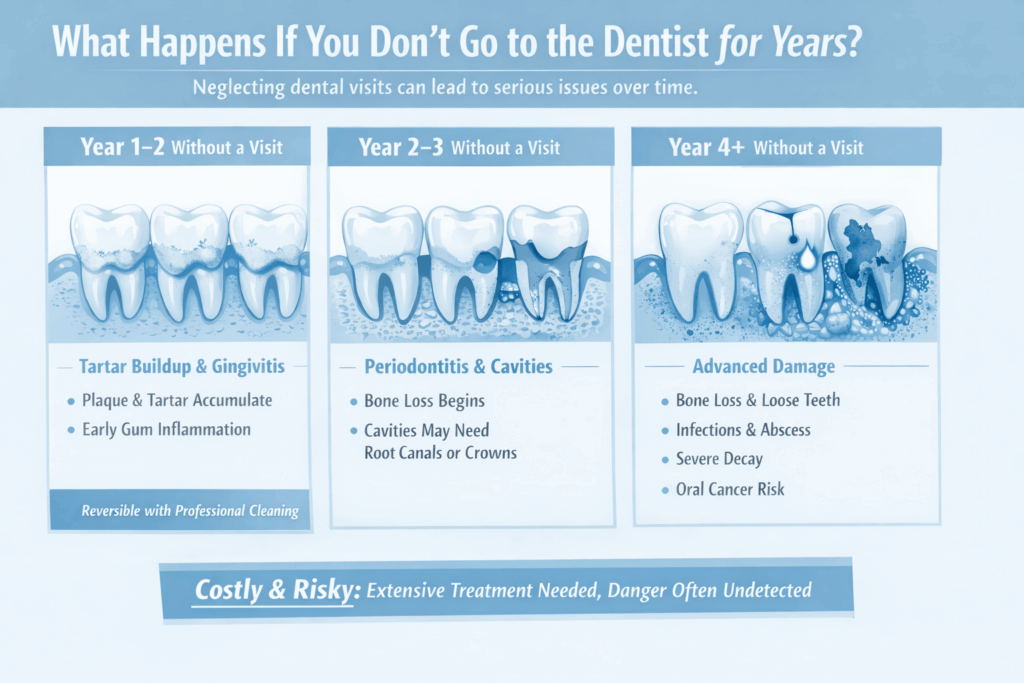
What Happens If You Don’t Go to the Dentist for Years?
Skipping the dentist doesn’t just risk your teeth. Here’s the typical progression:
The Financial Reality
- A small cavity filling: $150–$300
- The same tooth left untreated: $2,000–$4,000 (root canal + crown)
- Prevention is always cheaper than repair.
People who return to the dentist after years away will typically require multiple visits for deep cleanings (scaling and root planing), X-ray series, and restorative work before they can return to a normal maintenance schedule.
Can Good Brushing and Flossing Reduce How Often You Need to Go?
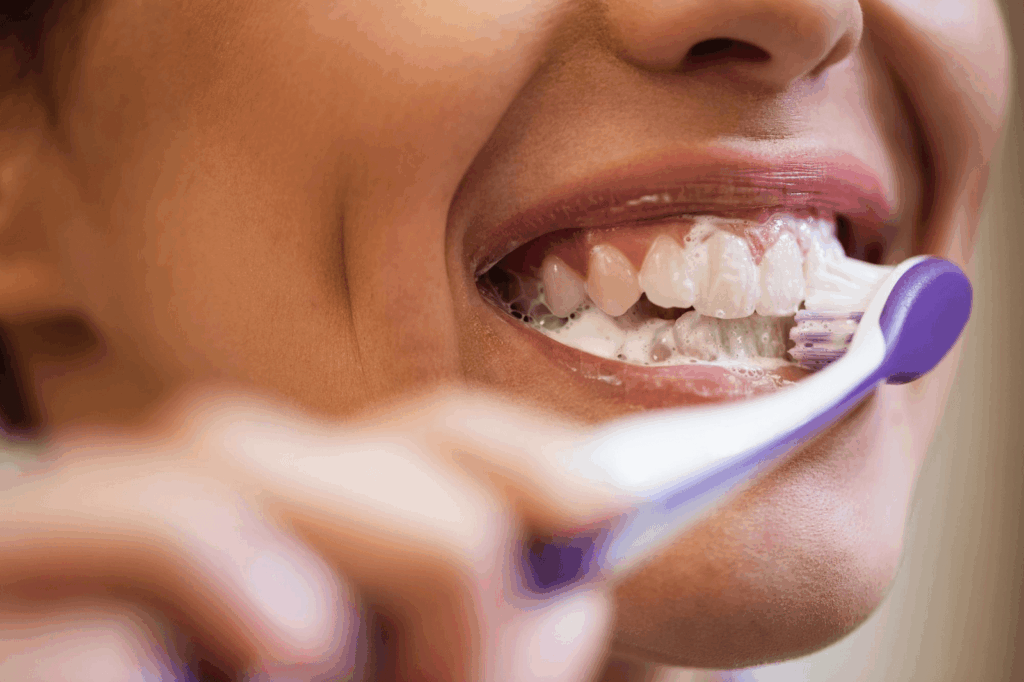
Yes, but only to a point. Here’s the honest answer:
What excellent home care can do:
- Significantly reduce tartar buildup and cavity formation
- Keep your gum tissue healthier between visits
- Potentially extend your recall interval from 6 months to 9–12 months if your dentist agrees
- Reduce the time it takes for your cleaning at each visit
What home care cannot do:
- Remove tartar (hardened plaque) — only a professional scaler can
- Detect cavities between teeth or beneath old fillings on X-ray
- Screen for oral cancer
- Spot bone loss or gum pocket deepening
- Evaluate the condition of crowns, implants, or other restorations
The best home care routine: brush twice daily (2 full minutes) with fluoride toothpaste, floss once a day, and use an antibacterial mouthwash.
Patients who do all three consistently are the most likely to qualify for longer intervals between visits.
How Often Should You Go to the Dentist Without Dental Insurance?
Lack of insurance is one of the most common reasons Americans skip dental visits. Here are practical options for the uninsured:
Options to reduce cost:
- Dental school clinics: Supervised student dentists provide care at dramatically reduced rates (often 40–70% less than private practice)
- Community health centers (FQHCs): Federally qualified centers offer sliding-scale fees based on income
- Dental discount/membership plans: Many practices offer in-house annual plans ($150–$400/year) that cover cleanings, exams, and X-rays plus discounts on treatment
- Negotiating cash-pay rates: Many dentists offer a discount for patients who pay at the time of service
FSA/HSA accounts: Dental care is FSA/HSA eligible — use pre-tax dollars if available
Minimum viable plan without insurance:
- Aim for at least ONE visit per year.
- Ask for X-rays only when clinically needed (not every visit).
- Don’t skip cavities — the longer you wait, the more they cost.
Signs You Should See a Dentist Immediately (Don’t Wait for Your Next Scheduled Checkup)
These symptoms should not wait for a routine appointment:
- Toothache or spontaneous tooth pain
- Swelling in the jaw, gum, or face
- Loose adult tooth
- Broken or cracked tooth
- Persistent sore or white/red patch in the mouth that hasn’t healed in 2 weeks
- Gums that bleed heavily and consistently despite improved hygiene
- Jaw pain, clicking, or difficulty opening your mouth
- Lost or damaged filling, crown, or dental appliance causing pain
- Sensitivity to temperature that is new, severe, or persistent
- Any injury to the mouth, teeth, or jaw
Important Warning
- Any sore, lump, or bleeding in your mouth that lasts more than 2 weeks needs urgent attention.
- These can be early signs of oral cancer, which is highly treatable when caught early.
Expert Takeaway: What Is the Right Dental Visit Frequency for You?
There is no single “right” answer to how often you should go to the dentist, but there is a right answer for you, and your dentist is the best person to determine it.
Use this framework:
| Your situation | Start here |
|---|---|
| Healthy adult, great hygiene, no risk factors | Every 6–12 months |
| Healthy but not a perfect brusher/flosser | Every 6 months |
| Any of the high-risk conditions above | Every 3–6 months |
| Active gum disease or diabetic | Every 3 months |
| Haven’t been in years | Book now; expect multiple visits to catch up |
The best dental visit is the one you actually make. If twice a year feels financially or logistically hard, once a year with excellent home care is vastly better than never.
Ready to Find YOUR Ideal Dental Schedule?
If there’s one thing to take away from all of this, it’s that there isn’t a universal rule that works for everyone.
The “every 6 months” advice isn’t wrong. It’s just… incomplete.
Some people can go a full year without issues. Others need to be seen every few months to stay ahead of serious problems. Most fall somewhere in between.
What actually matters is this:
- Your current oral health
- Your risk factors
- Your habits over time
At Robison Associates, we take the guesswork out of dental care. Every checkup includes an oral cancer screening and a full health review. Because we believe your mouth is the window to your overall health.
Schedule your appointment today!