
Key Takeaways:
- TMJ disorder affects the jaw joint and surrounding muscles, leading to symptoms like jaw pain, clicking, headaches, ear discomfort, and difficulty chewing or opening the mouth.
- It usually develops gradually due to multiple factors, including stress-related jaw clenching, teeth grinding (bruxism), poor posture, joint strain, or previous jaw injury—not a single cause.
- Symptoms often overlap with other conditions, such as sinus problems, ear infections, or tension headaches, which is why diagnosis is based on symptom patterns and clinical evaluation rather than one test.
- Most TMJ cases are not severe and improve with conservative care, including soft diet, stress control, posture correction, jaw exercises, and sometimes dental appliances, like night guards.
- Early treatment leads to better outcomes, while untreated TMJ can become chronic and require long-term management, though surgery is rarely needed.
Your jaw clicks every time you chew. You wake up with headaches that seem to start near your temples. Sometimes your ear feels full or achy, yet there’s no sign of an ear infection. Maybe your jaw even feels stiff when you yawn or open your mouth wide.
At first, these symptoms can seem unrelated. Many people assume they’re dealing with stress, sinus problems, ear issues, or recurring headaches. What they don’t realize is that all of these symptoms can sometimes point to the same underlying problem: TMJ disorder.
Quick Answer: What Is TMJ Disorder?
TMJ disorder is a condition affecting the jaw joint and surrounding muscles that causes jaw pain, clicking sounds, stiffness, and difficulty in jaw movement.
Signs Your TMJ Symptoms May Need Professional Evaluation: Quick Check
Answer these:
- Do you have jaw pain most days?
- Does your jaw click + hurt (not just click)?
- Do you wake up with headaches or jaw stiffness?
- Does chewing feel uncomfortable?
- Has it lasted more than 2 weeks?
If you said YES to 2 or more, you may benefit from a professional evaluation. And, if you said YES to 4 or more, you should see a dentist ASAP.
What Is TMJ Disorder?
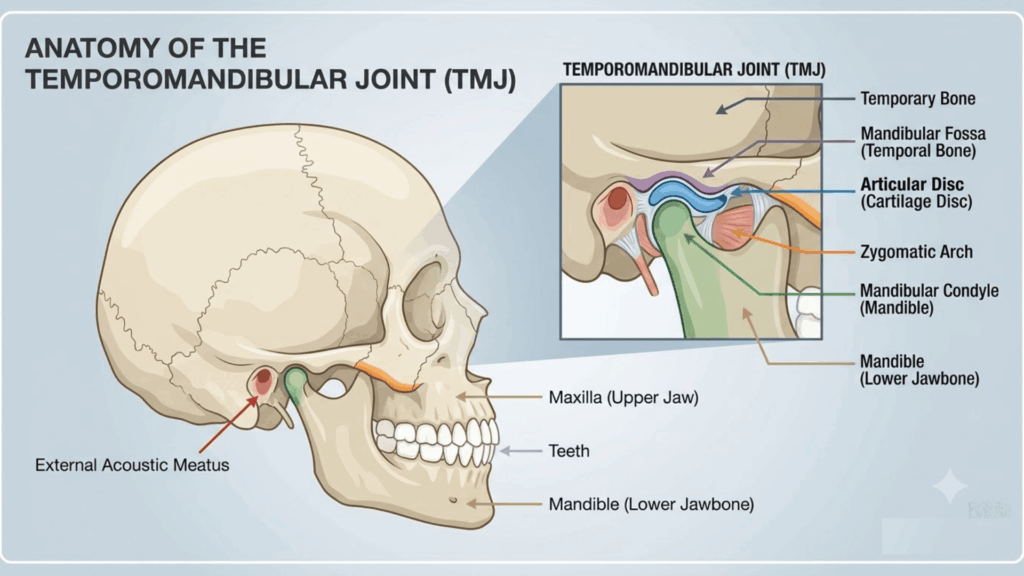
TMJ disorder is a condition that affects the temporomandibular joint (TMJ) and the muscles that control jaw movement. This joint allows you to perform everyday activities such as chewing, speaking, swallowing, and yawning. When the joint or surrounding muscles become irritated, inflamed, or dysfunctional, even simple movements can become painful or uncomfortable.
How Does the TMJ Work Normally?
The temporomandibular joint is located on each side of your face, just in front of your ears. It connects your lower jaw (mandible) to your skull and is one of the most frequently used joints in the body.
Unlike a simple hinge, the TMJ performs two types of movement at the same time. It can open and close like a door hinge, but it can also slide forward, backward, and side to side. This unique combination of movements allows you to chew food, speak clearly, and move your jaw smoothly throughout the day.
Inside the joint is a small cartilage disc that acts like a cushion between the jawbone and the skull. It acts as a shock absorber that helps the joint move smoothly while reducing friction and pressure. When the disc stays in its proper position, the jaw can move comfortably and efficiently.
In a healthy TMJ, the joint, cartilage disc, muscles, ligaments, and bones all work together in harmony.
How Does TMJ Disorder Develop?
TMJ disorder occurs when the bones, cartilage disc, and surrounding muscles no longer work together smoothly, disrupting normal jaw movement.
This can happen when:
- The cartilage disc shifts out of its normal position
- The joint becomes irritated or inflamed
- The surrounding muscles become tight or overactive
- Jaw movement becomes restricted or less smooth
Risk Factors for TMJ Disorder
Did you know that about 34% to 39% of the world’s population suffers from TMJ disorders? It is more prevalent in adults, but it can affect children and teenagers as well.
It occurs when there is strain on the jaw joint and surrounding muscles. Several factors contribute to the unnecessary strain on jaw joints, increasing the chances of TMJ disorder. It includes:
Stress and Emotional Tension
Stress and anxiety can lead to unconscious tightening of the jaw muscles during the day or while sleeping.
Persistent jaw clenching increases muscle workload and may contribute to jaw fatigue, stiffness, and discomfort over time.
Teeth Grinding (Bruxism)
Bruxism refers to the habitual grinding or clenching of teeth. Research suggests that awake bruxism affects approximately 68.99% of individuals, while sleep bruxism affects around 16.28%.
Repeated grinding places excessive pressure on the jaw joint and surrounding muscles, increasing the risk of TMJ-related symptoms.
Poor Posture
Forward head posture and prolonged screen use can affect the alignment and coordination of the neck and jaw muscles.
Over time, poor posture may increase strain on structures that support normal jaw movement.
Repetitive Jaw Habits
Certain everyday behaviors can place additional stress on the jaw joint, including:
- Frequent gum chewing
- Nail biting
- Chewing on pens or other objects
- Habitually chewing on one side of the mouth
These repetitive actions may contribute to joint irritation and muscle fatigue.
Previous Jaw Injury
Individuals who have experienced a jaw injury, facial trauma, or impact to the temporomandibular joint may have a higher risk of developing TMJ dysfunction later.
Arthritis and Other Joint Disorders
People with osteoarthritis, rheumatoid arthritis, or other conditions affecting the joints may be more susceptible to TMJ problems because the temporomandibular joint can be affected in the same way as other joints in the body.
Hormonal and Biological Factors
Research suggests that hormonal fluctuations may influence pain sensitivity, inflammation, and connective tissue behavior within the jaw joint.
Some women report increased TMJ symptoms during periods of hormonal change, including menstruation, pregnancy, and menopause. While the exact relationship remains under investigation, hormonal influences may help explain differences in symptom patterns among individuals.
Note: TMJ disorder is often multifactorial, meaning several risk factors may work together to create strain on the jaw joint over time.
Signs and Symptoms of TMJ Disorder
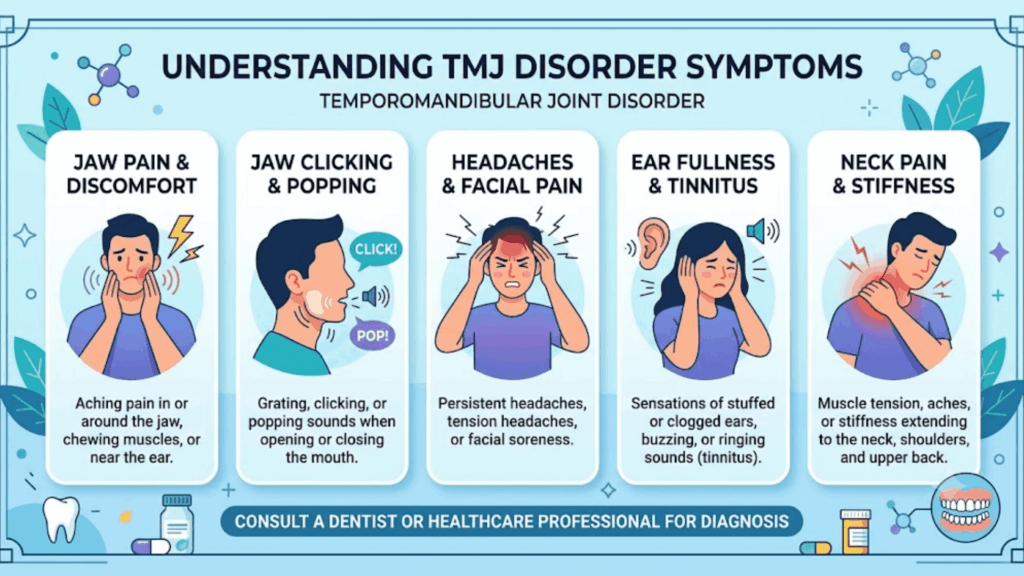
TMJ disorder can affect the jaw joint, surrounding muscles, and nearby areas such as the head, ears, face, and neck. Symptoms may develop gradually and often vary in severity from person to person. Some individuals experience occasional discomfort, while others notice persistent pain or difficulty using their jaw during daily activities.
Jaw-Related Symptoms
The most common symptoms occur directly around the temporomandibular joint and jaw muscles. These may include:
- Jaw pain or tenderness, especially near the joint in front of the ears
- Clicking, popping, or grinding sounds when opening or closing the mouth
- Stiffness or tightness in the jaw
- Difficulty opening the mouth fully
- A jaw that locks temporarily in an open or closed position
- Pain that worsens while chewing, talking, or yawning
Symptoms Beyond the Jaw
Because the jaw shares muscles and nerves with the head and neck, TMJ disorder can cause discomfort in nearby areas.
Common symptoms include:
- Headaches, particularly around the temples
- Ear pain or a sensation of fullness in the ears despite the absence of infection
- Facial pain or muscle soreness
- Neck and shoulder tension
- Fatigue in the jaw muscles after speaking or chewing
Functional Difficulties
As the condition progresses, everyday jaw movements may become uncomfortable or restricted.
You may notice:
- Difficulty chewing certain foods
- Pain while speaking or yawning
- A feeling that the teeth do not fit together normally when biting
- Reduced jaw mobility during daily activities
When Should You See a Dentist for TMJ Pain?
Not all TMJ symptoms require immediate treatment, but some signs indicate that the condition may be progressing and should not be ignored. Understanding whether your symptoms are mild, moderate, or severe is the first step in choosing the right treatment.
- Jaw pain lasts longer than one to two weeks
- Symptoms interfere with eating, speaking, or sleeping
- The jaw frequently locks or becomes difficult to move
- Headaches, ear discomfort, and jaw pain occur together
TMJ symptoms often fluctuate, becoming more noticeable during periods of stress, increased jaw use, or poor sleep quality.
TMJ Severity Levels (Mild to Severe)
TMJ disorder typically follows a gradual progression from mild, occasional discomfort to more persistent functional limitation. Understanding the severity level helps determine the right treatment approach and prevents the condition from becoming chronic.
| Stage | Typical Symptoms | How It Develops | Recovery Timeline | Clinical Meaning | Recommended Action |
|---|---|---|---|---|---|
| Mild TMJ (Early Stage) | Occasional clicking, mild jaw fatigue, slight stiffness after stress or chewing | Begins due to temporary muscle strain, stress-related clenching, or minor overuse | Few days to 1–2 weeks | Early muscle tension without structural damage | Self-care: soft diet, rest, ice/heat, stress control |
| Moderate TMJ (Progressive Stage) | Frequent jaw pain, regular clicking with discomfort, headaches, ear fullness, chewing difficulty | Ongoing muscle overload and joint irritation from repeated habits or posture strain | 2–6 weeks (may fluctuate) | Functional strain affecting daily jaw activity | Home care + dental evaluation; night guard if grinding present |
| Severe TMJ (Advanced Stage) | Jaw locking, persistent pain, limited mouth opening, worsening headaches/ear pain | Structural or disc-related dysfunction with long-term muscle imbalance | Weeks to months (can become chronic) | Significant joint dysfunction requiring clinical intervention | Dentist/TMJ specialist evaluation, imaging, therapy or medication |
| Chronic TMJ (Recurrent Pattern) | Symptoms come and go, flare-ups during stress, long-term jaw sensitivity | Long-standing untreated or partially managed TMJ dysfunction | Ongoing condition | Persistent neuromuscular imbalance | Long-term management: lifestyle control, therapy, habit correction |
How TMJ Typically Progresses (Clinical Insight)
TMJ disorder usually does not appear suddenly in its severe form. Instead, it develops in stages:
- It often begins with mild muscle tension or occasional clicking
- Progresses into more frequent pain and functional discomfort
- May advance to restricted jaw movement or locking in severe cases
- And it can become chronic if underlying causes are not managed
Note: TMJ progression is not always linear. Symptoms may fluctuate based on stress levels, jaw usage, posture, and sleep-related habits. However, early-stage TMJ is highly responsive to conservative care, while later stages often require structured dental or therapeutic intervention.
What Causes TMJ Disorder?
TMJ disorder develops when the temporomandibular joint or the muscles that control jaw movement stop functioning normally. Rather than having a single cause, TMJ dysfunction often results from changes within the joint itself, surrounding muscles, or supporting structures.
Muscle Dysfunction and Jaw Tension
The muscles responsible for opening, closing, and stabilizing the jaw can become overworked or uncoordinated. When these muscles remain tense for prolonged periods, they may contribute to pain, stiffness, and restricted movement.
Muscle-related dysfunction is one of the most common mechanisms behind TMJ symptoms.
Disc Displacement Within the Joint
Inside the temporomandibular joint is a small cartilage disc that acts as a cushion between the jawbone and skull.
When this disc shifts out of its normal position, it can interfere with smooth jaw movement and may lead to:
- Clicking or popping sounds
- A sensation of the jaw catching during movement
- Difficulty opening or closing the mouth normally
- Episodes of jaw locking
Joint Inflammation
Inflammation within or around the temporomandibular joint can increase sensitivity and discomfort.
Inflammatory changes may affect the joint lining, surrounding tissues, or supporting structures, causing pain during chewing and jaw movement.
Degenerative Joint Changes
Over time, wear and tear can affect the surfaces of the jaw joint. Conditions such as osteoarthritis may gradually reduce the joint’s ability to move smoothly.
Degenerative changes can contribute to:
- Chronic stiffness
- Reduced jaw mobility
- Ongoing discomfort during movement
Structural Changes Following Injury
Previous trauma to the jaw, face, or temporomandibular joint may alter how the joint functions. Even after the initial injury heals, changes in alignment or joint mechanics can sometimes contribute to long-term TMJ symptoms.
In most cases, TMJ disorder develops through a combination of muscular, mechanical, and joint-related factors rather than a single underlying problem.
Previous Jaw Injury or Trauma
A direct injury to the jaw or face can sometimes trigger TMJ symptoms. This may include sports injuries, accidents, or impact to the jaw area.
Depending on severity, trauma can:
- Affect joint alignment
- Irritate surrounding muscles
- Lead to long-term joint sensitivity
Symptoms may appear immediately or develop gradually after the injury.
Note: In most patients, TMJ disorder develops gradually due to a combination of muscle tension, joint stress, and daily habits. Understanding these underlying causes is essential for effective treatment and long-term symptom control.
TMJ Disorder vs Other Conditions
TMJ disorder is often confused with other conditions because it shares symptoms like facial pain, headaches, and ear discomfort. However, the cause and pattern of symptoms are different in each case. Understanding these differences can help you better identify whether the issue is related to the jaw joint or something else.
TMJ vs Bruxism
Bruxism is a habit where a person clenches or grinds their teeth, usually during sleep or stress. TMJ disorder is a condition affecting the jaw joint and surrounding muscles.
Bruxism does not always lead to TMJ disorder, but frequent grinding can overload the jaw muscles and joint, eventually causing pain, clicking, and stiffness.
TMJ vs Sinus Pain
TMJ pain is usually located near the jaw joint, in front of the ears, and often worsens with chewing or talking. Sinus pain is typically felt in the cheeks, forehead, or under the eyes and is often associated with nasal congestion or pressure.
TMJ vs Ear Infection
TMJ disorder can cause ear pain or a feeling of fullness, but unlike an ear infection, it does not involve fever, discharge, or hearing loss. TMJ-related ear symptoms also tend to worsen with jaw movement.
TMJ vs Arthritis
Arthritis is a joint disease that can affect the temporomandibular joint, leading to inflammation and long-term wear. TMJ disorder is a broader condition that includes muscle dysfunction, disc problems, and joint issues—arthritis is just one possible cause.
Quick Comparison Table
| Condition | Key Source of Pain | Main Symptoms | How to Differentiate |
|---|---|---|---|
| TMJ Disorder | Jaw joint & muscles | Clicking jaw, jaw pain, headaches, ear fullness | Worsens with chewing or jaw movement |
| Bruxism | Teeth & jaw muscles | Grinding, morning jaw soreness, worn teeth | Habit-based, often during sleep |
| Sinus Pain | Sinus cavities | Facial pressure, nasal congestion, headache | Improves with sinus treatment, not jaw movement |
| Ear Infection | Middle/inner ear | Ear pain, fever, hearing changes | Infection signs present (fever, discharge) |
| Arthritis | Joint degeneration | Chronic stiffness, reduced jaw movement | Progressive worsening over time |
Can TMJ Disorder Cause Headaches, Ear Pain, Neck Pain, or Dizziness?
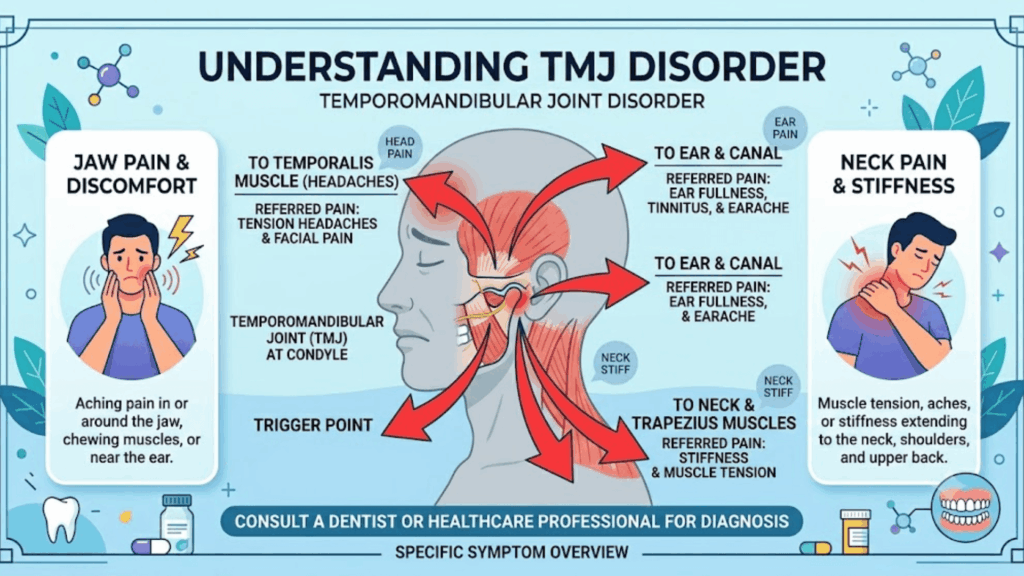
Yes—TMJ disorder can cause pain in areas that are not directly part of the jaw. This happens because the jaw joint and its surrounding muscles are closely connected to the head, face, and neck. When the TMJ becomes irritated or overworked, the pain can “refer” to nearby regions, making it feel like the problem is coming from somewhere else.
Referred Pain Mechanism Explained
TMJ disorder often causes what is known as referred pain, where discomfort is felt in a different area than the actual source of the problem. The nerves and muscles in the jaw are interconnected with those in the head, neck, and ears. Because of this shared nerve network, irritation in the jaw joint can be interpreted by the brain as pain in nearby regions.
This is why TMJ disorder is sometimes mistaken for headaches, ear infections, or even neck problems.
Jaw Muscle Connection to Head & Neck
The jaw muscles are part of a larger muscle system that includes the temples, face, neck, and upper shoulders. When the jaw is constantly clenched or strained, these muscles can become tight and fatigued.
As a result, pain and stiffness may spread beyond the jaw and affect the neck and upper back region. This muscle tension is one of the most common reasons TMJ patients report feeling “tightness” or discomfort in multiple areas at once.
Migraine-Like Headaches
TMJ disorder is strongly associated with headaches, especially tension-type or migraine-like pain. These headaches are often felt around the temples, forehead, or behind the eyes.
Jaw clenching and muscle overuse can trigger or worsen these headaches, particularly during periods of stress or after prolonged chewing or speaking. Many people with TMJ disorder first seek treatment for recurring headaches before realizing the jaw may be the underlying cause.
Tinnitus (Ringing in the Ears)
Some individuals with TMJ disorder experience tinnitus, which is a ringing, buzzing, or clicking sound in the ears. This occurs because the temporomandibular joint is located very close to the ear canal and shares surrounding muscle and nerve structures.
While TMJ-related tinnitus is not the same as an ear infection, it can create a persistent sense of ear discomfort or pressure that fluctuates with jaw movement.
Neck Muscle Strain
Neck pain and stiffness are also common in people with TMJ disorder. When the jaw muscles are overworked, the neck muscles often compensate, leading to tightness and reduced mobility in the upper neck and shoulder region.
This connection between the jaw and neck muscles means that TMJ dysfunction can sometimes feel like a combined jaw and neck problem rather than an isolated issue.
Dizziness in Severe Cases
In some cases, TMJ disorder may be associated with dizziness or a feeling of imbalance. While this is less common, it can occur due to muscle tension around the jaw, ear-related pressure changes, or the body’s response to chronic pain.
If dizziness persists or worsens, it is important to rule out other medical conditions, as it is not always directly caused by TMJ disorder.
How TMJ Disorder Is Diagnosed
TMJ disorder is usually diagnosed through a combination of physical examination, symptom review, and—if needed—imaging tests. There is no single test that confirms TMJ disorder, so dentists or specialists evaluate how the jaw moves, where the pain is located, and whether the joint is functioning properly.
Clinical Jaw Examination
The first step in diagnosing TMJ disorder is a physical examination of the jaw joint and surrounding muscles. A dentist will gently feel the area in front of the ears while you open and close your mouth.
They may check for:
- Tenderness or pain around the joint
- Clicking, popping, or grinding sounds
- Asymmetry in jaw movement
- Muscle tightness in the face, jaw, or neck
This helps identify whether the issue is muscular, joint-related, or a combination of both.
Bite and Alignment Testing
Your bite (how your upper and lower teeth meet) plays an important role in jaw function. A dentist may evaluate whether your teeth align properly when you close your mouth.
Misalignment or uneven pressure on one side of the jaw can contribute to TMJ strain over time. While bite issues are not always the cause of TMJ disorder, they can worsen symptoms in some cases.
Range of Motion Assessment
Jaw movement is carefully measured to see how far and how comfortably you can open and close your mouth.
The clinician may assess:
- How wide you can open your mouth
- Whether movement feels smooth or restricted
- If the jaw shifts or deviates to one side
- Any locking or catching sensations
Limited or painful movement is a common indicator of TMJ dysfunction.
Imaging (X-ray, MRI, CT Scan)
In more complex or persistent cases, imaging tests may be used to get a clearer view of the jaw joint.
Different scans help in different ways:
- X-rays: Show bone structure and alignment of the jaw
- CT scans: Provide detailed images of bone changes or damage
- MRI scans: Help evaluate the soft tissues, including the cartilage disc inside the joint
Imaging is usually recommended when symptoms are severe, long-lasting, or not responding to initial treatment.
TMJ Treatment Options: Step-by-Step Guide
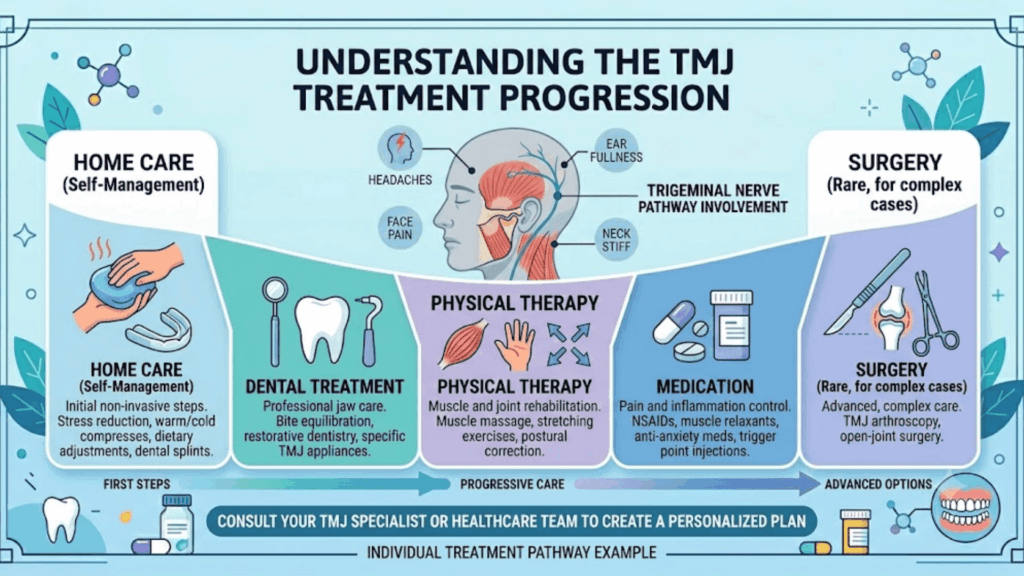
TMJ disorder is usually treated using a step-by-step approach that starts with simple, non-invasive methods and only progresses to advanced treatments if symptoms do not improve. Most people experience significant relief with conservative care and lifestyle adjustments.
Step 1 – Conservative Home Care
In many cases, TMJ symptoms can improve with basic self-care techniques that reduce strain on the jaw joint and allow the surrounding muscles to relax.
Common home care strategies include:
- Soft diet
- Ice and heat therapy
- Avoid jaw overuse
- Stress management
Step 2 – Dental Treatments
If symptoms persist, dental interventions may help stabilize jaw function.
Common options include:
- Night guards to reduce nighttime grinding pressure
- Occlusal splints for joint stabilization
- Bite assessment to identify uneven pressure distribution
Step 3 – Physical Therapy
Physical therapy focuses on improving jaw movement, reducing muscle tension, and correcting posture-related strain.
Treatment may include:
- Controlled jaw mobility exercises
- Neck and posture alignment correction
- Myofascial release techniques for tight facial muscles
Step 4 – Medications & Injections
For moderate to severe symptoms, medications or minimally invasive treatments may be used to manage pain and inflammation.
These include:
- Anti-inflammatory medications to reduce pain
- Muscle relaxants for severe muscle tension
- Targeted injections in chronic muscle trigger points (in select cases)
Step 5 – Surgery (Rare Cases)
Surgery is considered only when all other treatment options fail and symptoms remain severe or disabling.
It may be recommended in cases of:
- Severe structural damage to the jaw joint
- Advanced degenerative joint disease (such as arthritis affecting the TMJ)
- Persistent jaw locking or dysfunction that does not improve with conservative care
Overall, most TMJ patients improve significantly with non-surgical treatments, especially when care is started early and combined with lifestyle changes and stress management strategies.
Home Treatment for TMJ Pain Relief
When TMJ symptoms flare up, even simple activities like chewing, talking, or yawning can start to feel uncomfortable. The good news is that many cases of TMJ pain improve with consistent at-home care that reduces strain on the jaw joint and allows the surrounding muscles to relax.
While these methods won’t replace professional TMJ treatment in severe cases, they can significantly reduce pain and help prevent symptoms from getting worse.
Eat a Soft Diet and Avoid Trigger Foods
One of the fastest ways to reduce TMJ pain is to minimize the workload on your jaw.
A soft diet helps the jaw muscles rest while still allowing you to eat comfortably. This may include foods like soups, yogurt, mashed vegetables, rice, smoothies, and soft-cooked grains.
At the same time, it’s important to avoid foods that require excessive chewing or force, such as:
- Hard or crunchy foods like nuts, chips, and raw carrots
- Sticky or chewy foods like caramel or chewing gum
- Large bites of food that require a wide mouth opening
Instead of taking big bites, try cutting food into smaller pieces and chewing slowly and evenly on both sides of your mouth. This reduces uneven pressure on the jaw joint and helps prevent further irritation.
Avoid Excessive Jaw Movements
Overusing the jaw can keep the joint and muscles in a constant state of strain, slowing down recovery.
To reduce stress on the TMJ:
- Avoid opening your mouth too wide, especially when yawning or eating
- Stop chewing gum, as it keeps the jaw muscles active for long periods
- Break habits like nail biting or pen chewing
- Try to avoid clenching your teeth, especially during stress or concentration
Many people don’t realize how often they tighten their jaw throughout the day. Becoming aware of this habit is an important step in reducing symptoms.
Use Ice or Heat for Pain Relief
Cold and heat therapy can both be helpful for TMJ pain, depending on your symptoms.
- Ice therapy: Best for sharp pain, inflammation, or flare-ups. Apply an ice pack wrapped in a cloth to the side of the face for about 10–15 minutes at a time.
- Heat therapy: Best for muscle tightness or stiffness. A warm compress can help relax the jaw muscles and improve blood flow.
You can repeat either method 2–3 times a day, but avoid applying heat or ice directly to the skin for long periods.
Try Gentle TMJ Exercises
Gentle jaw exercises can help improve mobility and reduce stiffness over time, but they should always be done slowly and without forcing movement.
Some commonly recommended exercises include:
- Controlled jaw opening and closing: Slowly open and close your mouth in a straight line without forcing movement or causing pain.
- Tongue-to-palate positioning: Rest your tongue lightly on the roof of your mouth while allowing your jaw to stay relaxed.
- Jaw relaxation exercises: Keep your lips closed gently while allowing your teeth to stay slightly apart, releasing tension in the jaw muscles.
- Neck posture correction: Maintain an upright head position, especially when working on screens, to reduce strain on the jaw and neck muscles.
These exercises should never cause pain. If discomfort increases, it’s best to stop and consult a professional before continuing.
Massage and Relaxation Techniques
Since stress and muscle tension are major contributors to TMJ pain, relaxation techniques can play an important role in recovery.
Gentle massage can help release tight jaw muscles. Using your fingers, apply light circular pressure around the jaw joint, cheeks, and temples for a few minutes at a time.
In addition, stress management techniques such as deep breathing, meditation, or simply taking short breaks during stressful tasks can help reduce unconscious jaw clenching.
Many people notice that TMJ symptoms worsen during periods of emotional or physical stress, so calming both the body and mind can make a noticeable difference in daily comfort.
Overall, at-home TMJ care works best when these habits are used consistently. The goal is not just to reduce pain temporarily, but to give the jaw muscles and joint enough rest to recover and function more smoothly over time.
How Long Does TMJ Disorder Last?
The duration of TMJ disorder can vary widely from person to person. Some cases improve within a few days or weeks, while others may persist for months or become long-term if the underlying causes are not addressed. In most situations, TMJ disorder is manageable and does not lead to permanent damage when treated early.
Acute vs Chronic TMJ
TMJ disorder is generally classified into two types based on how long symptoms last:
- Acute TMJ disorder: This is short-term TMJ pain that develops suddenly, often due to stress, temporary jaw overuse, or minor muscle strain. Symptoms may come and go and often improve with rest and self-care.
- Chronic TMJ disorder: This refers to symptoms that persist for several months or keep recurring over time. Chronic TMJ is more likely to involve ongoing muscle tension, joint inflammation, or structural issues within the jaw.
Understanding whether TMJ is acute or chronic is important because it influences the type and duration of treatment required.
Mild Cases: Recovery Timeline
In mild cases, TMJ symptoms often improve within a few days to a few weeks, especially when the jaw is rested and triggers are avoided.
Many people notice improvement when they:
- Switch to a soft diet
- Avoid gum chewing and jaw overuse
- Reduce stress and jaw clenching habits
- Use ice or heat therapy consistently
If the underlying cause is temporary—such as stress-related clenching or minor muscle strain—symptoms may resolve completely without long-term treatment.
Chronic TMJ: Management Approach
Chronic TMJ disorder does not always “go away” quickly, but it can usually be managed effectively with a combination of treatments.
Instead of a quick cure, the focus shifts to:
- Reducing pain and inflammation
- Improving jaw function and movement
- Preventing symptom flare-ups
- Managing contributing factors like stress or grinding
Many people with chronic TMJ lead normal, comfortable lives once they learn how to control triggers and follow a consistent treatment plan.
Factors Affecting Healing
The healing timeline for TMJ disorder depends on several individual factors, including:
- Severity of the condition: Mild muscle strain improves faster than joint or disc-related problems
- Underlying cause: Stress-related TMJ may resolve quicker than arthritis or structural joint issues
- Daily habits: Continued jaw clenching, gum chewing, or poor posture can slow recovery
- Stress levels: High stress often leads to repeated muscle tension and symptom flare-ups
- Treatment consistency: Regular use of home care, dental appliances, or therapy improves outcomes significantly
Overall, TMJ disorder does not follow a fixed timeline. While mild cases often resolve quickly, chronic cases require ongoing management rather than a one-time cure. With the right approach, however, most people experience substantial improvement in symptoms over time.
How to Prevent TMJ Disorder
TMJ disorder is not always completely preventable, but the risk can be significantly reduced by lowering daily strain on the jaw muscles and maintaining healthy movement habits. Prevention is mainly about correcting small, repetitive behaviors that silently overload the jaw over time.
Reduce Everyday Jaw Strain
One of the most effective prevention strategies is minimizing unnecessary pressure on the jaw throughout the day.
Practical habits include:
- Take short breaks every 30–60 minutes if you work on a screen or focus for long periods
- Keep your teeth slightly apart when not speaking or eating (resting position)
- Use gentle reminders to relax your jaw if you notice clenching
These small resets help prevent constant muscle tension buildup.
Avoid Unconscious Clenching Habits
Many TMJ cases develop due to repeated unconscious habits that strain the jaw muscles.
To reduce this risk:
- Avoid clenching your teeth during concentration or stress
- Do not rest your chin on your hand for long periods
- Break habits like nail biting, pen chewing, or jaw tightening
Becoming aware of jaw tension patterns is often the first step in prevention.
Maintain Proper Posture During Daily Activities
Posture plays a direct role in jaw and neck muscle balance. Poor alignment, especially forward head posture, increases long-term strain on the TMJ.
To improve posture habits:
- Keep your head aligned over your shoulders while sitting
- Avoid leaning toward screens for extended periods
- Adjust chair and screen height to reduce neck strain
- Take posture breaks to stretch the neck and upper back
Good posture reduces indirect stress on the jaw joint.
Limit Excessive Jaw Activity
Overuse of the jaw muscles can gradually lead to fatigue and irritation.
To prevent this:
- Avoid chewing gum for long durations
- Do not eat overly hard or chewy foods frequently
- Take smaller bites and chew evenly on both sides
- Give your jaw natural rest periods during the day
This helps maintain balanced muscle activity.
Protect Your Jaw During Sleep (If Needed)
For individuals who grind or clench their teeth at night, preventive dental support can be important.
Preventive measures include:
- Using a dentist-recommended night guard if you grind your teeth
- Managing stress before bedtime to reduce nighttime clenching
- Maintaining a relaxed jaw position while sleeping
Nighttime protection helps reduce long-term joint stress and tooth wear.
Note: TMJ prevention is not about a single habit — it is about reducing repeated daily strain on the jaw system. Small behavioral corrections, when followed consistently, can significantly lower the risk of developing chronic TMJ symptoms.
TMJ Disorder and Lifestyle-Based Therapies
Along with medical and dental treatments, many people with TMJ disorder also benefit from lifestyle-based therapies. These approaches don’t directly “fix” the joint, but they can help reduce muscle tension, improve posture, and manage pain levels—especially when used alongside primary treatment.
TMJ and Yoga
Yoga can be helpful for TMJ disorder mainly because of its impact on stress and muscle tension. Since stress is one of the most common triggers for jaw clenching, practices that calm the nervous system can indirectly reduce TMJ symptoms.
Gentle yoga may help:
- Reduce overall stress and anxiety levels
- Relax tight muscles in the neck, shoulders, and jaw region
- Improve body awareness, including unconscious jaw clenching habits
- Support better posture, which can reduce strain on the jaw joint
Slow, controlled movements and breathing-focused poses are generally more beneficial than intense or high-strain workouts for people with TMJ symptoms.
TMJ and Massage Therapy
Massage therapy can provide relief by targeting tight muscles around the jaw, face, and neck. Since TMJ disorder often involves muscle overuse and tension, relaxing these areas can reduce pain and improve movement.
Massage may help:
- Release tight jaw and facial muscles
- Reduce pressure around the temporomandibular joint
- Improve blood flow to overworked muscles
- Ease tension-related headaches and facial discomfort
Even gentle self-massage around the jawline and temples can provide temporary relief when done correctly and without applying excessive pressure.
TMJ and Chiropractic Care
Chiropractic care focuses on improving alignment and mobility of the spine and neck, which can indirectly influence jaw function. Poor posture—especially forward head posture—can increase strain on the jaw muscles and worsen TMJ symptoms.
Chiropractic support may help:
- Improve neck and upper spine alignment
- Reduce muscle tension contributing to jaw strain
- Support better posture during daily activities
- Decrease referred pain in the jaw, neck, and shoulders
While chiropractic care is not a direct treatment for the TMJ joint itself, it may be beneficial as part of a broader pain management plan.
TMJ and Acupuncture
Acupuncture is sometimes used as a complementary therapy for TMJ-related pain. It involves placing thin needles at specific points in the body to help reduce pain perception and muscle tension.
Potential benefits include:
- Temporary reduction in jaw pain and muscle tightness
- Improved relaxation of overactive facial muscles
- Reduction in stress-related symptoms that worsen TMJ
- Support for overall pain management in chronic cases
Although results can vary from person to person, some patients report noticeable symptom relief when acupuncture is combined with other TMJ treatments.
Lifestyle-based therapies work best as supportive care rather than standalone treatments. When combined with dental care, physical therapy, and habit correction, they can play a helpful role in managing TMJ symptoms and improving daily comfort.
Final Takeaway
TMJ disorder is a common and highly manageable condition in most cases. While symptoms like jaw pain, clicking, or headaches can feel frustrating or concerning, it’s important to remember that you’re not alone—these are issues dental professionals see and help manage regularly.
Most patients experience significant improvement with simple, conservative care, especially when contributing factors like stress, clenching, or posture are addressed early. In many cases, small, consistent changes along with professional guidance can noticeably improve daily comfort and jaw function.
Early evaluation can also help prevent symptoms from becoming long-term or more difficult to manage. The reassuring part is that TMJ disorder rarely requires invasive treatment, and most people respond well to non-surgical approaches.
At Robison Dental, the focus is on helping patients understand the root cause of their jaw discomfort and providing gentle, personalized care aimed at long-term relief and comfort.
If you’ve been experiencing ongoing jaw pain, clicking, or related symptoms, it’s a good idea to schedule a dental evaluation. We can help identify what’s driving your symptoms and guide you toward the right treatment so you can feel more comfortable again. Contact us today!