Summary
- Teeth discoloration can be surface-level (extrinsic) or internal (intrinsic), each requiring different treatments.
- Teeth bleaching is a form of whitening that uses peroxide-based agents to lighten deeper stains.
- Professional treatments provide faster, safer, and more noticeable results than most at-home options.
- Good oral hygiene and avoiding staining foods, smoking, and tobacco use help prevent tooth discoloration.
Teeth bleaching and teeth whitening are dental procedures used to address tooth discoloration, which is the staining or darkening of teeth. Your teeth may appear yellow, brown, purple, or gray. Teeth discoloration is more than just a cosmetic concern as it can signal deeper dental problems that should not be ignored, such as cavities, enamel erosion, and more.
The following table shows the two types of teeth discoloration:
| Type | Where It Occurs | Causes |
|---|---|---|
| Extrinsic discoloration | Affects the enamel (the outer surface of the tooth) | Food, drinks, smoking, and poor oral hygiene |
| Intrinsic discoloration | Starts inside the tooth and affects the dentin | Dental trauma, certain medications, excessive fluoride, aging |
Causes of Teeth Discoloration
Avoidable Causes
- Certain Foods and Beverages: Dark-colored foods and beverages such as coffee, tea, red wine, cola, berries, and dark sauces can stain tooth enamel over time. Sugary and acidic foods also make teeth more prone to staining.
- Smoking and Tobacco: Smoking and tobacco use lead to yellow, brown, or black stains.
- Poor Oral Hygiene: Inadequate brushing and flossing lead to plaque and tartar buildup, which cause discoloration.
- Certain Mouthwashes: Long-term use of mouthwashes containing chlorhexidine or cetylpyridinium chloride may cause staining.
Unavoidable Causes
- Aging: Tooth enamel naturally wears down as you age, revealing the darker dentin underneath, which makes teeth appear yellow or gray over time.
- Genetics: Some people are born with thinner enamel or naturally darker dentin, making them more prone to staining.
- Dental Trauma: Damage to nerves from an injury can cause internal discoloration, resulting in gray or darkened teeth.
- Dental Treatments: Silver amalgam used in metal fillings can also discolor teeth.
- Diseases: Metabolic diseases, eating disorders, calcium deficiency, celiac disease, and liver disease can stain your teeth.
Excess fluoride intake during childhood and cancer treatments, such as chemotherapy, are other unavoidable causes of discoloration.
| Stain | Cause | What it May Indicate |
|---|---|---|
| Yellow stains |
|
|
| Brown stains |
|
|
| Purple stains |
|
|
| Gray stains |
|
|
| White flecks or spots |
|
|
| Black spots |
|
|
What is Teeth Whitening
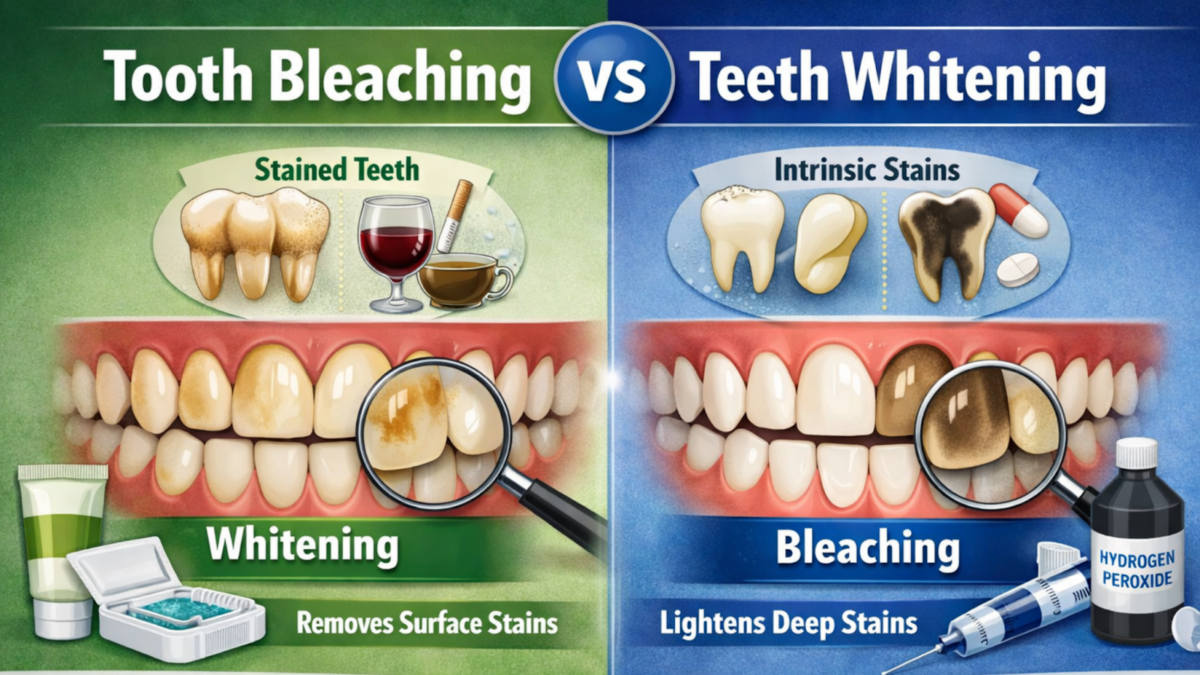
Teeth whitening refers to a cosmetic dental procedure that removes stains to restore the natural color of your teeth. Most teeth whitening treatments clean and lighten the enamel (the outer layer of the tooth), improving overall tooth brightness.
What is Teeth Bleaching
It is a teeth-whitening procedure that uses oxidizing agents, such as hydrogen peroxide, to break down stain molecules, removing yellow and brown stains. This, as a result, brightens the tooth’s natural color.
Whitening vs Bleaching
Teeth whitening is an umbrella term for procedures that remove teeth stains. Teeth bleaching is a form of teeth whitening that refers specifically to treatments that use chemical agents to lighten the natural color of the tooth, including deeper intrinsic stains.
| Feature | Teeth Whitening (Non-Bleaching Procedures) | Teeth Bleaching |
|---|---|---|
| Target | Surface stains | Surface and deeper intrinsic stains |
| Method | Cleaning, polishing, and mild whitening agents | Chemical oxidizing agents (peroxide-based) |
| Results | Subtle improvement | More dramatic whitening |
| Duration | May need frequent touch-ups | Can last months to years with care |
| Professional Involvement | Optional | Recommended for safe and effective results |
Professional vs At-Home Treatment
Professional Treatments
Professional teeth whitening or teeth bleaching is performed under the supervision of an expert with utmost safety and precision. Dentists use the right concentrations of bleaching agents, such as hydrogen peroxide, to achieve better results.
Professional treatment can be tailored to the type of stains and the level of sensitivity. You may notice significant whitening in just one session. There is a lower risk of gum irritation, enamel damage, or uneven whitening.
At-Home Treatments
You can use milder whitening gels, strips, or trays for at-home treatment. However, results appear in several days or weeks. While the treatment is less expensive, improper application or overuse can lead to tooth sensitivity, gum irritation, or uneven results.
Who Should Avoid Teeth Whitening or Bleaching?
Pregnant or Breastfeeding Women
Hydrogen peroxide can be absorbed into the bloodstream in small amounts. While it is unlikely to cause harm, whitening agents have not been extensively tested for safety during pregnancy.
Children and Adolescents
Young teeth have thinner enamel, and they are not fully developed. Intrinsic bleaching may harm the pulp, leading to sensitivity or long-term dental issues.
People with Tooth Sensitivity
You may experience sharp pain or prolonged discomfort if you are prone to dentin hypersensitivity. Whitening chemicals temporarily open dentin tubules, which increases sensitivity.
Individuals with Gum Disease or Receding Gums
When applied to areas with gingival recession, whitening gel can cause tissue damage. Exposed roots or inflamed gums can be susceptible to chemical burns or irritation.
Teeth with Worn Enamel, Erosion, or Cracks
Bleaching agents can penetrate teeth with thinned enamel or microcracks, which increases the risk of pulp irritation.
How to Prevent Teeth Staining?
You can prevent teeth staining by making the following small changes in your life:
- Brush your teeth at least twice and floss at least once a day.
- Limit coffee, cola, tea, and red wine.
- Rinse your mouth after drinking beverages that can stain.
- Do not brush immediately after eating acidic foods, as brushing can make the acid penetrate your enamel.
- Quit smoking.
Conclusion
Teeth bleaching is a type of teeth whitening treatment that uses chemical oxidizing agents to remove surface and deeper stains. Other teeth-whitening procedures mostly remove surface stains.
Led by award-winning Dr. Letha Robinson, Robison Associates uses the latest technology for teeth whitening and teeth bleaching in Colorado Springs.
Schedule an appointment today!
Frequently Asked Questions
Q1. Is teeth bleaching safe for your teeth and gums?
A. Yes, teeth bleaching is safe for your teeth and gums when done correctly and under professional supervision.
Q2. How long do the results of teeth bleaching or whitening last?
A. At-home treatment with the best bleaching strips for teeth lasts a few months to about a year. With proper care, professional teeth bleaching can last 1 to 3 years.
Q3. Will teeth turn yellow again after whitening or bleaching?
A. Teeth whitening and bleaching remove existing stains. While you can avoid avoidable causes of teeth discoloration. Natural aging and enamel thinning can cause yellowing again.
Q4. Who is not a good candidate for teeth whitening or bleaching?
A. The following should consider consulting a dentist before trying at-home treatment:
- Pregnant or breastfeeding women
- Children and adolescents
- People with severe tooth sensitivity, gum diseases, receding gums, or untreated cavities
- Individuals with teeth with worn enamel or cracks
Q5. How painful is teeth bleaching?
A. Teeth bleaching is usually painless, but some individuals may experience mild to moderate sensitivity.
[/fusion_text][/fusion_builder_column][/fusion_builder_row][/fusion_builder_container]